If you are planning a midsummer trip, understanding Korea weather in July / what to wear in July in Korea can make a huge difference to your travel experience. July is one of the hottest and most humid months of the year in Korea, and it is also the heart of the rainy season in many regions. Temperatures often rise above 30°C (86°F), and in some inland cities they can climb much higher, especially during heat waves. At the same time, the monsoon season, known as jangma, can bring sudden downpours, muggy air, and dramatic shifts between sunny mornings and stormy afternoons.
For international travelers, Korea weather in July / what to wear in July in Korea is really about preparing for two things at once: intense summer heat and heavy seasonal rain. Some weeks feel like full tropical summer, with hot sunshine and sticky nights, while other weeks are dominated by strong monsoon showers and flooding rain. This means breathable clothing, comfortable sandals or sneakers, a reliable umbrella, and quick-dry items are all smart choices. It is also worth carrying a light layer for indoor spaces, since air conditioning in Korea can feel surprisingly strong after hours spent outside in the heat.
Table of Contents
Click on the city you’re curious about to see the July weather.
Korea weather in July – Seoul
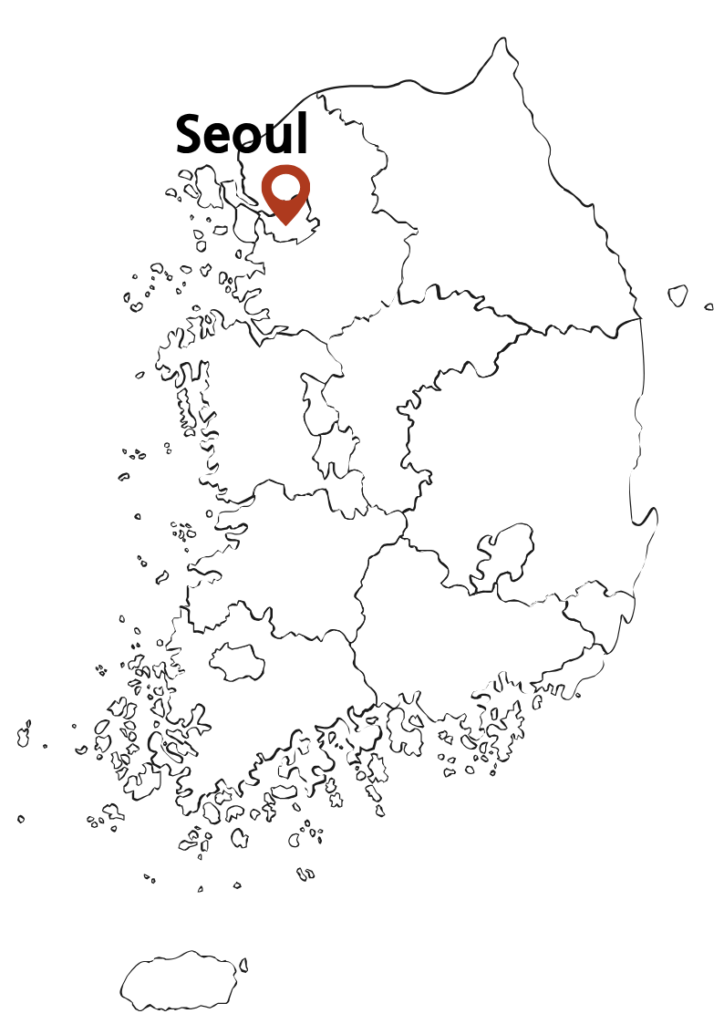
Seoul is located in the central-western part of South Korea and has the characteristics of an inland basin city. Although it sits farther north than many southern destinations, summer temperatures rise quickly here because of the basin landscape and the urban heat island effect. Once the heat builds, it often lingers well into the night, creating hot and humid evenings. July in Seoul is usually a mix of oppressive heat, heavy humidity, and a concentrated stretch of monsoon rainfall.
Week 1
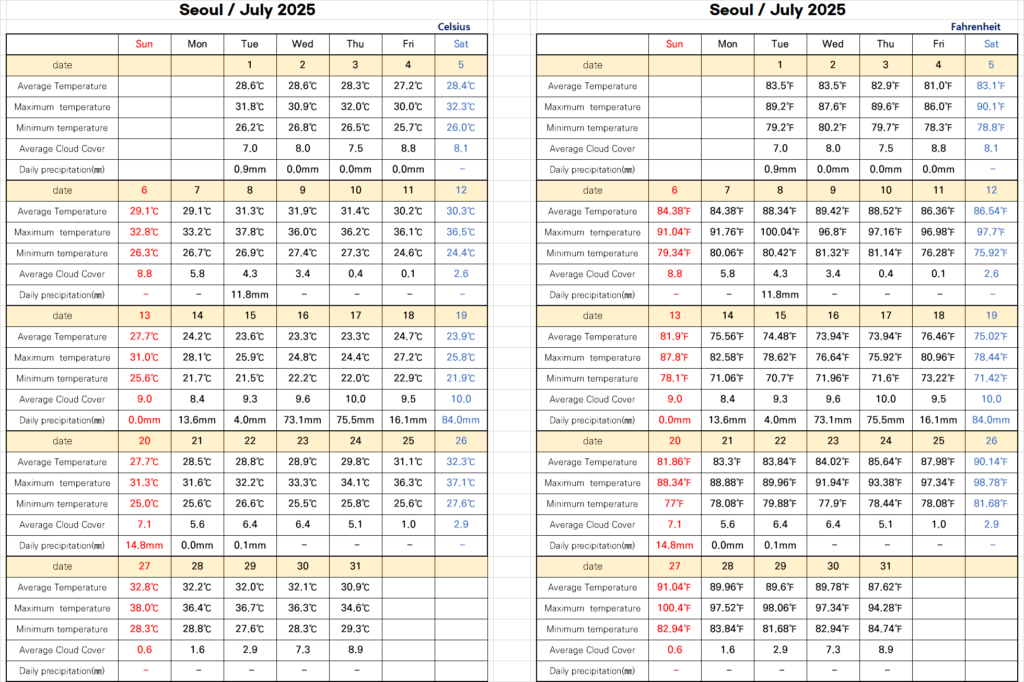
July opened with steamy summer weather in Seoul. The highest temperature reached 32.3°C (90.1°F), while the lowest temperature stayed warm at 25.7°C (78.3°F). Only 0.9mm of rain fell on the 1st, so the week felt mostly dry despite the humidity. For travelers, it likely felt hot, sticky, and tiring during the daytime.
Week 2
The second week turned much hotter and felt like peak summer. The highest temperature surged to 37.8°C (100.04°F) on the 8th, while the lowest temperature was 24.4°C (75.92°F). Rainfall reached 11.8mm on the 8th, adding even more moisture to the air. Sightseeing during this stretch probably felt exhausting unless you took frequent breaks indoors.
Week 3
The third week was the wettest part of the month and clearly reflected monsoon season. The highest temperature eased to 31.0°C (87.8°F), while the lowest temperature dropped to 21.5°C (70.7°F) under thick clouds and rain. Heavy rainfall arrived repeatedly, including 73.1mm on the 16th, 75.5mm on the 17th, and 84.0mm on the 19th. Travel conditions likely felt uncomfortable and unpredictable, with outdoor plans often interrupted by downpours.
Week 4
After the heaviest rain moved out, Seoul quickly returned to harsh summer heat. The highest temperature rose again to 37.1°C (98.78°F), and the lowest temperature stayed at 25.0°C (77.0°F). Rainfall was limited to 14.8mm on the 20th before the week became much drier. The overall feeling was hot, humid, and difficult for long walks in the afternoon sun.
Week 5
The final week of July was clear, bright, and brutally hot. The highest temperature reached 38.0°C (100.4°F), while the lowest temperature remained extremely high at 28.3°C (82.94°F). No rainfall was reported during this period, and tropical nights became a real feature of the weather. For travelers, the city likely felt intense both day and night, with very little relief after sunset.
Summary & What to Wear in july in Korea (Seoul)
Seoul had a very hot and humid July, with the third week bringing the most concentrated monsoon rain and the other weeks dominated by intense heat. The combination of tropical nights, high humidity, and sudden rain made the city feel especially tiring for daytime sightseeing. Light linen shirts, breathable short sleeves, and quick-dry clothing are the best choices here. A sturdy umbrella, comfortable sandals, and a thin cardigan for strong indoor air conditioning are also very useful.
Korea weather in July – Gyeongju
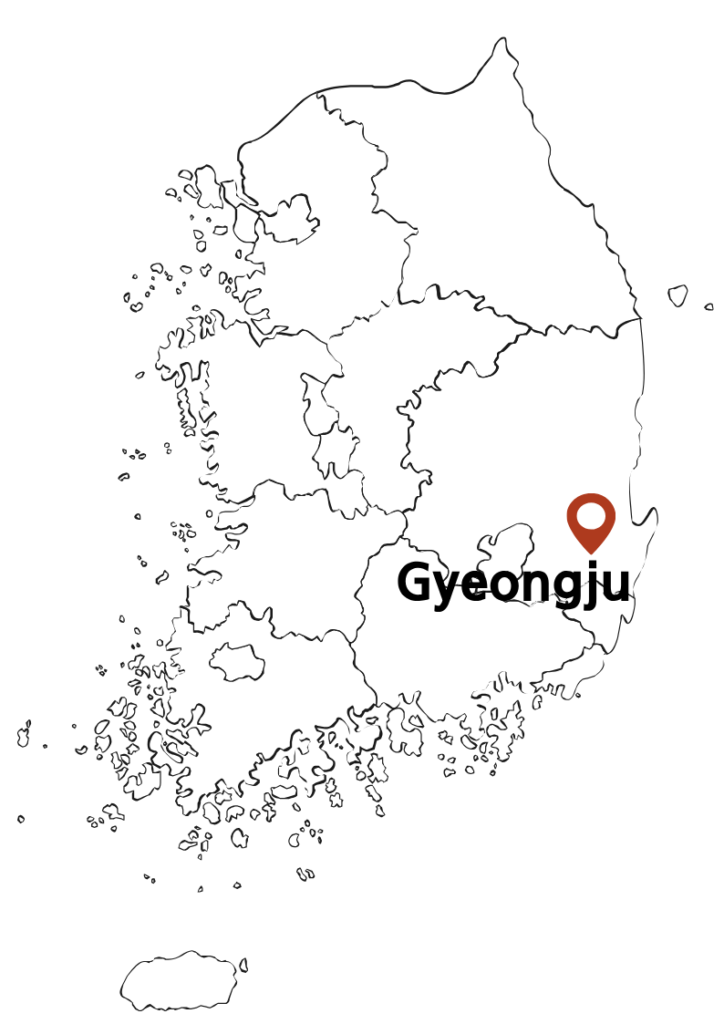
Gyeongju is located in the southeastern inland area of Korea and is known for its basin-like geography. Because it does not benefit much from the cooling influence of the sea, summer temperatures rise sharply and often remain among the hottest in the country. The city is filled with outdoor historic sites, which makes the summer heat feel even more intense for travelers. July in Gyeongju is usually marked by severe heat before and after a strong burst of monsoon rain.
Week 1
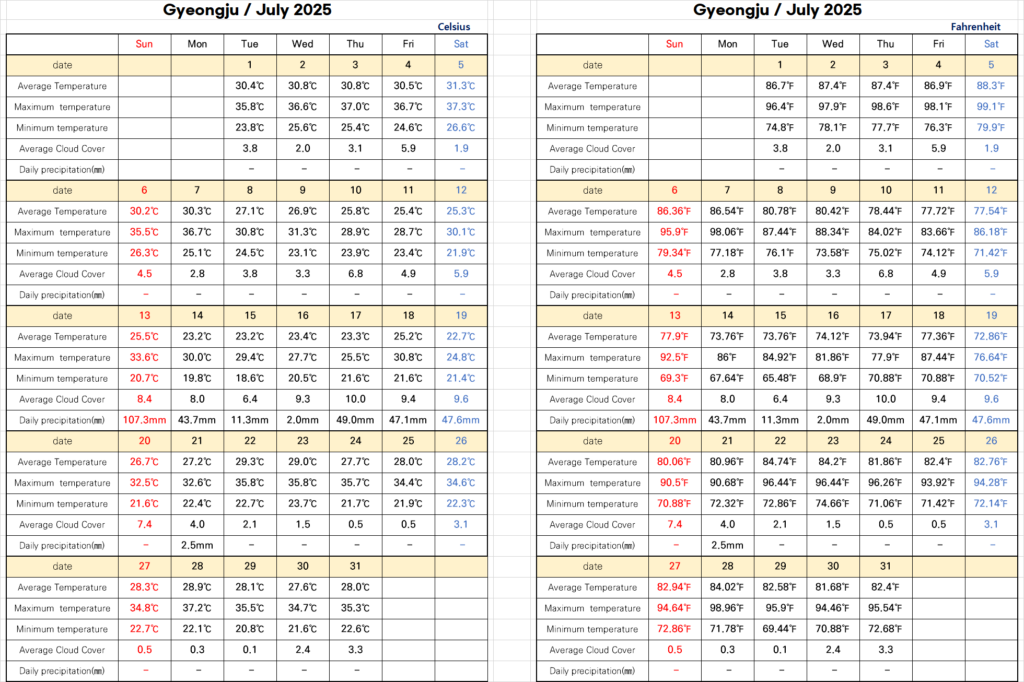
July began with clear skies and powerful summer heat in Gyeongju. The highest temperature reached 37.3°C (99.1°F), while the lowest temperature was 23.8°C (74.8°F). No rainfall was recorded during this first week. The weather likely felt dry, bright, and punishing during midday walks around outdoor ruins.
Week 2
The heat continued strongly through the second week. The highest temperature reached 36.7°C (98.06°F), and the lowest temperature stayed at 21.9°C (71.42°F). Rain did not fall during this period, so the hot pattern stayed uninterrupted. For travelers, the atmosphere probably felt blazing in the afternoon but slightly easier in the early morning.
Week 3
The third week brought the most dramatic weather shift of the month. The highest temperature lowered to 33.6°C (92.5°F), while the lowest temperature dropped to 18.6°C (65.48°F). Heavy monsoon rain arrived, including an intense 107.3mm on the 13th along with more rain through the week. The overall feeling was stormy, humid, and much less suitable for outdoor heritage sightseeing.
Week 4
After the worst rain passed, Gyeongju quickly heated up again. The highest temperature rose to 35.8°C (96.44°F), and the lowest temperature was 21.6°C (70.88°F). Rainfall was light, with only 2.5mm on the 21st. The week likely felt hot and bright again, though the air still carried some lingering humidity.
Week 5
The final week returned to a familiar pattern of dry and severe summer heat. The highest temperature reached 37.2°C (98.96°F), while the lowest temperature was 20.8°C (69.44°F). No rainfall was reported during these last days of the month. For travelers, the city probably felt extremely hot under direct sunlight, especially around exposed historical sites.
Summary & What to Wear in july in Korea (Gyeongju)
Gyeongju experienced an intense July, with brutal basin heat on most weeks and a major burst of monsoon rain in the third week. Because many of the city’s best attractions are outdoors, the weather can feel even more tiring here than the numbers suggest. Breathable cotton or performance fabrics are the most practical choice for sightseeing. A wide-brimmed hat, parasol, and comfortable summer shoes are highly recommended for long walks around temples and archaeological areas.
Korea weather in july – Gangneung
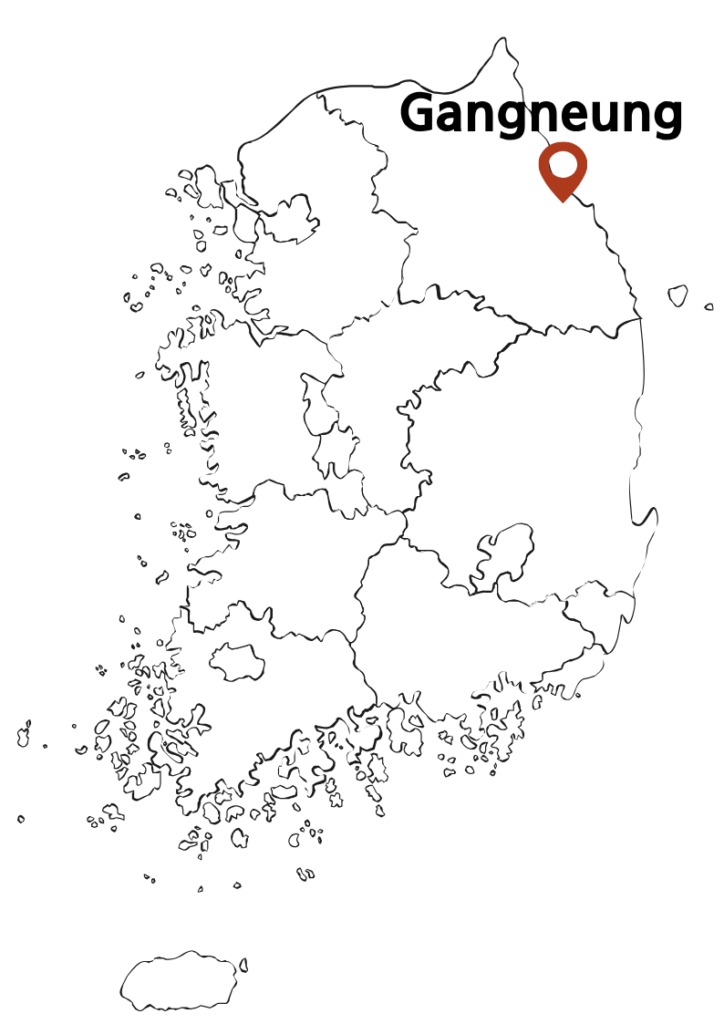
Gangneung is located on Korea’s east coast, to the east of the Taebaek Mountains. In summer, warm air crossing the mountains can create a foehn effect, which pushes temperatures even higher and often makes nights unusually warm. This is why Gangneung can experience extreme heat despite being a coastal city. July here is often sunny, intensely hot, and occasionally interrupted by monsoon rain during the middle of the month.
Week 1
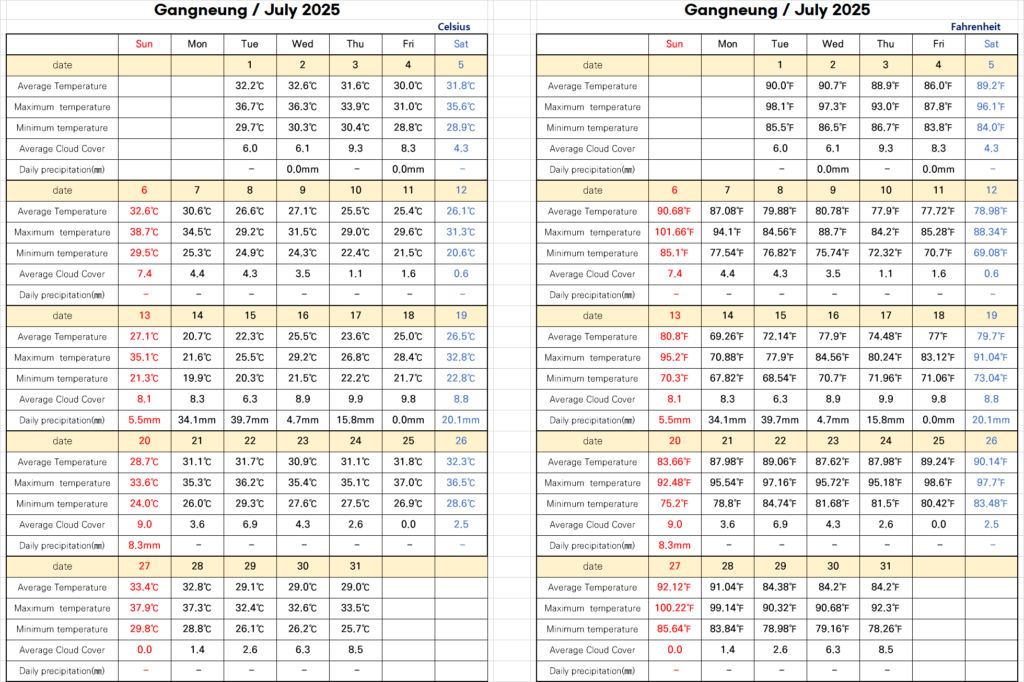
The month started with striking heat along the east coast. The highest temperature reached 36.7°C (98.1°F), while the lowest temperature stayed at a very warm 28.8°C (83.8°F). No rainfall was recorded during this opening stretch. The weather likely felt beachy but also overwhelmingly hot, especially at night.
Week 2
The second week brought the strongest heat of the month. The highest temperature soared to 38.7°C (101.66°F) on the 6th, while the lowest temperature was 20.6°C (69.08°F). No rain fell during this period, so the skies stayed mostly clear and bright. For travelers, it probably felt perfect for seaside views but harsh under direct midday sun.
Week 3
Monsoon influence finally appeared in the third week and changed the rhythm of the weather. The highest temperature fell slightly to 35.1°C (95.2°F), and the lowest temperature dropped to 19.9°C (67.82°F). Rainfall arrived on several days, including 34.1mm on the 14th, 39.7mm on the 15th, and 20.1mm on the 19th. The week likely felt more unstable, with humid air, cloudy skies, and occasional breaks from the worst heat.
Week 4
Once the rain eased, Gangneung quickly returned to very hot summer weather. The highest temperature climbed back to 37.0°C (98.6°F), while the lowest temperature was 24.0°C (75.2°F). Rainfall was limited to 8.3mm on the 20th, and the rest of the week was mostly dry. The overall travel feeling was sunny, glaring, and strongly summery.
Week 5
The end of the month was once again dry and intensely hot. The highest temperature reached 37.9°C (100.22°F), while the lowest temperature remained at 25.7°C (78.26°F). No rainfall was recorded during this final stretch. For visitors, the weather probably felt ideal for the beach but demanding for long outdoor activities.
Summary & What to Wear in july in Korea (Gangneung)
Gangneung had an extremely hot July, with only the third week bringing notable monsoon rain and slight relief. Most of the month was dominated by fierce sunshine, high temperatures, and very warm nights. Travelers should pack very light summer outfits, sunglasses, and a sun hat for strong UV exposure. Breathable clothing, sandals, and plenty of sunscreen are especially important for coastal sightseeing and beach visits.
Korea weather in July – Busan
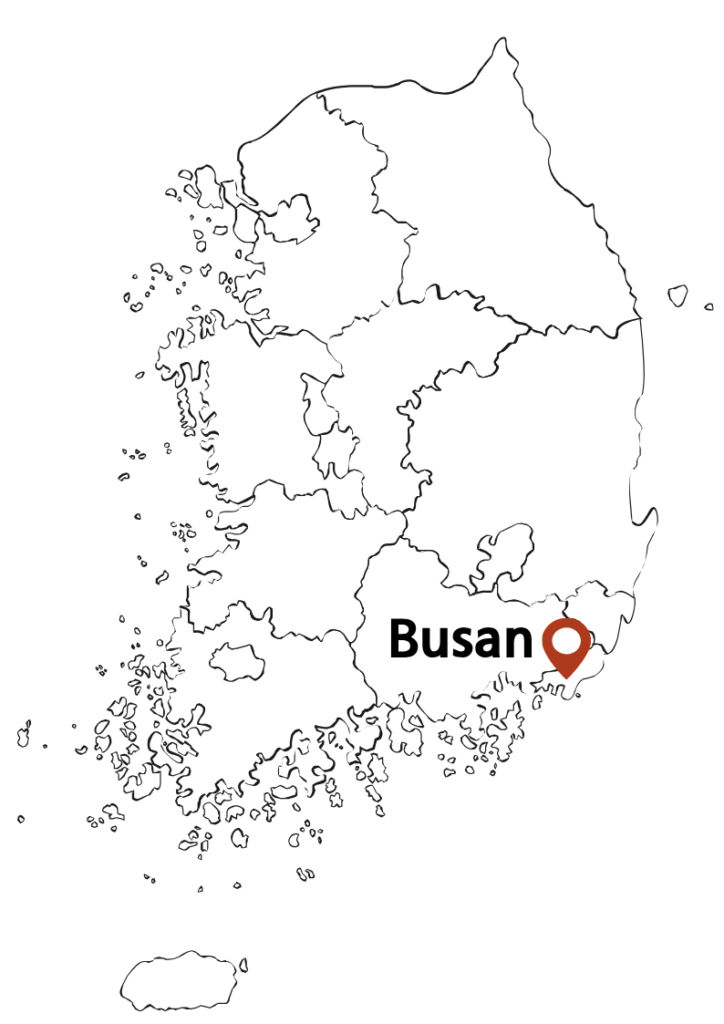
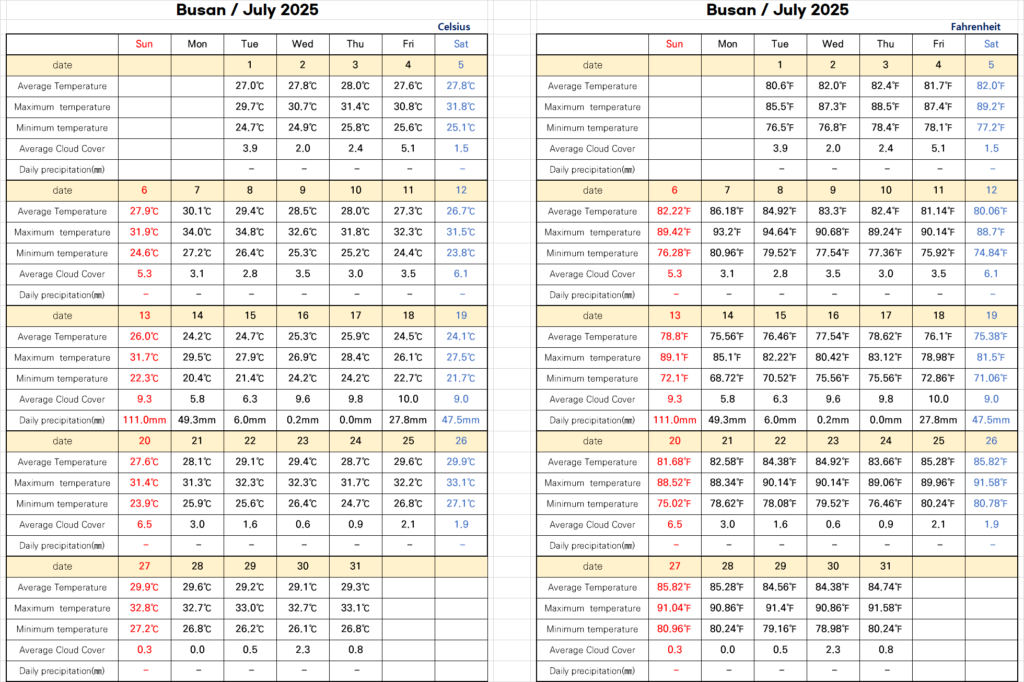
Busan sits on the southeastern coast of the Korean Peninsula and has a distinctly maritime climate. Compared with inland cities like Seoul or Gyeongju, Busan usually has slightly lower daytime highs, but the sea keeps the air very humid. The city also lies along the path of summer rain systems moving northward, so July can bring major downpours. This creates a summer atmosphere that feels sticky, warm, and sometimes stormy rather than dry or sharply hot.
Week 1
The first week of July was warm and humid in Busan. The highest temperature reached 31.8°C (89.2°F), while the lowest temperature stayed at 24.7°C (76.5°F). No rainfall was recorded during this period. The city likely felt summery and lively, though already sticky near the coast.
Week 2
The second week became hotter while keeping its coastal humidity. The highest temperature climbed to 34.8°C (94.64°F), and the lowest temperature was 23.8°C (74.84°F). Rain did not fall during this week, allowing the hot pattern to continue. For travelers, the weather probably felt good for beach visits but still draining in the midday humidity.
Week 3
The third week brought the strongest rain of the month and the clearest monsoon impact. The highest temperature was 31.7°C (89.1°F), while the lowest temperature dropped to 20.4°C (68.72°F). Rainfall was extremely heavy, including 111.0mm on the 13th, 49.3mm on the 14th, 27.8mm on the 18th, and 47.5mm on the 19th. Travel conditions likely felt wet, muggy, and more suitable for indoor activities than seaside plans.
Week 4
Once the heavy rain moved on, Busan returned to hot summer weather. The highest temperature reached 33.1°C (91.58°F), while the lowest temperature stayed at 23.9°C (75.02°F). No notable rainfall was reported during this stretch. The week probably felt bright, humid, and more comfortable for coastal sightseeing than the rainy period before it.
Week 5
The final week stayed warm and very humid along the coast. The highest temperature reached 33.1°C (91.58°F), and the lowest temperature remained at 26.1°C (78.98°F). No rainfall was recorded during these last days of the month. For visitors, the city likely felt sticky and summery, especially in beach and harbor areas after sunset.
Summary & What to Wear in july in Korea (Busan)
Busan’s July was humid from start to finish, with the third week bringing especially heavy monsoon rain and the rest of the month feeling typically coastal and hot. Even when temperatures were a little lower than inland cities, the moisture in the air made it feel quite uncomfortable. Quick-dry summer clothing works especially well in Busan’s climate. Waterproof sandals, a light umbrella, and breathable tops are practical choices for both beach days and sudden rainy spells.
Korea weather in July – Jeju
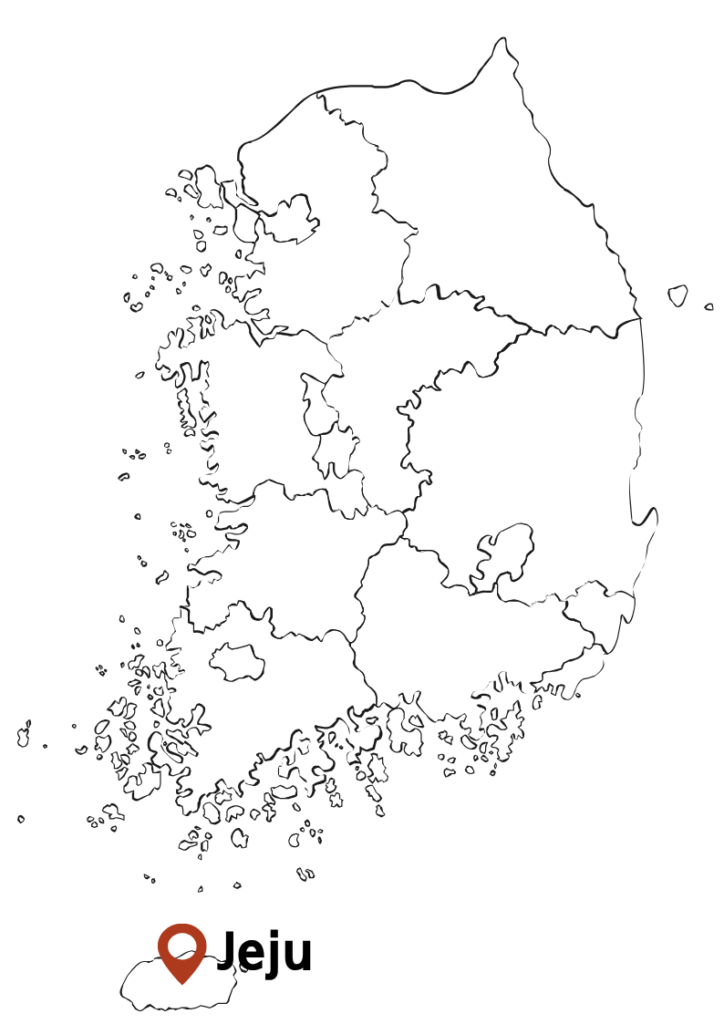
Jeju is Korea’s southern island and is surrounded by the sea on all sides. In July, the island feels subtropical, with high humidity, strong sunshine, and rain that can vary from one area to another because of Hallasan Mountain. Weather conditions are often more changeable here than on the mainland, especially when monsoon systems move through. This makes Jeju feel both breezy and tropical, with a mix of bright heat and sudden wet spells.
Week 1
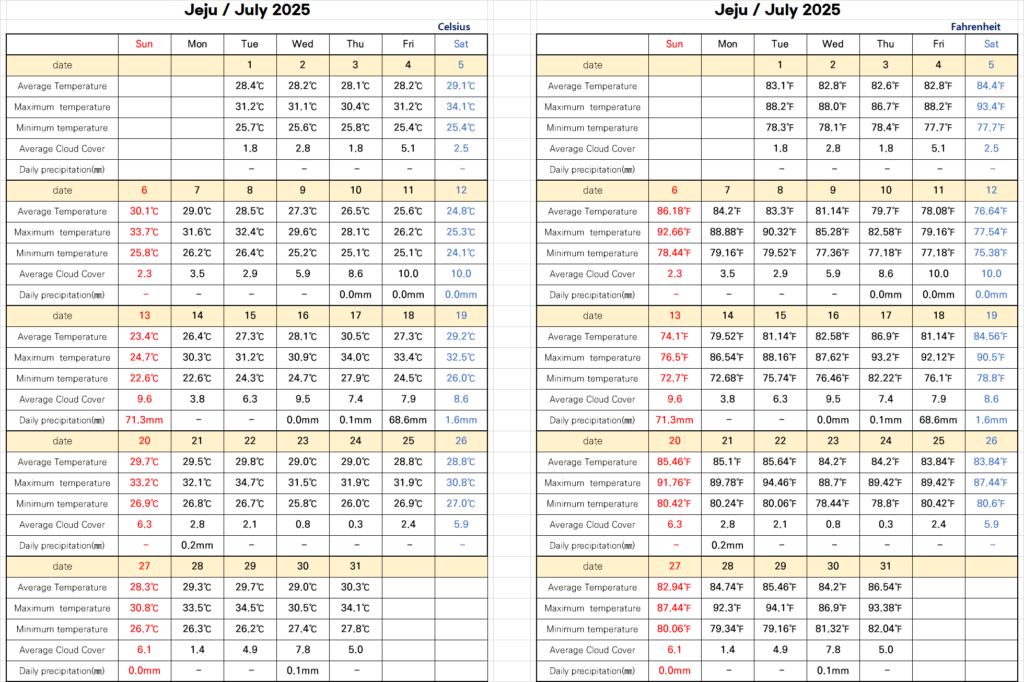
The month began with hot and humid island weather in Jeju. The highest temperature reached 34.1°C (93.4°F), while the lowest temperature stayed at 25.4°C (77.7°F). No rainfall was recorded during this first week. The overall feeling was tropical, sunny, and very summery from the start.
Week 2
The second week remained consistently warm and sticky. The highest temperature reached 33.7°C (92.66°F), and the lowest temperature was 24.1°C (75.38°F). Rainfall was only trace-level, with around 0.0mm recorded on the 11th and 12th. For travelers, the island probably felt bright and humid, with only the slightest hint of passing moisture.
Week 3
The third week brought the strongest rainfall of the month to Jeju. The highest temperature reached 34.0°C (93.2°F), while the lowest temperature dropped to 22.6°C (72.68°F). Heavy rain fell with 71.3mm on the 13th and 68.6mm on the 18th. The weather likely felt changeable and unsettled, with bursts of rain breaking up the tropical heat.
Week 4
After the heavier showers, Jeju returned to its hot midsummer rhythm. The highest temperature climbed to 34.7°C (94.46°F), and the lowest temperature stayed at 25.8°C (78.44°F). Only 0.2mm of rain was recorded on the 21st. The week probably felt sunny, humid, and breezy in a very typical island-summer way.
Week 5
The last week stayed warm and slightly unsettled at times. The highest temperature reached 34.5°C (94.1°F), while the lowest temperature was 26.2°C (79.16°F). Very light rainfall of around 0.0–0.1mm passed through on the 27th and 29th. For travelers, the atmosphere likely felt muggy, bright, and occasionally drizzly rather than fully rainy.
Summary & What to Wear in july in Korea (Jeju)
Jeju had a hot and humid July with tropical island energy, and the third week brought the clearest burst of heavy rain. Outside of that period, the weather stayed mostly warm, sunny, and slightly changeable with brief light showers. Thin, breathable clothing works best here, but light long sleeves or rash guards can also help with strong UV exposure. Because the island can be windy, a light raincoat is often more useful than a delicate umbrella.
This has been Seoul Mate Lenny, sharing a closer look at Korea’s weather across different cities. I hope this guide helps anyone planning a trip to Korea better understand the climate and prepare for their journey.

If you’re interested, take a look at the articles below as well!