Table of Contents – Korea weather in November
Click on the city you’re curious about to see Korea weather in November
Korea weather in November / what to wear in November in Korea is one of the most common questions travelers ask before a late autumn trip. November is the month when Korea shifts from colorful fall into the early stage of winter, so the weather can feel very different depending on where you go. In general, temperatures trend steadily downward through the month, with milder afternoons in the south and much colder mornings in inland cities.
For travelers, the biggest thing to remember is that November weather in Korea is not just “cool.” It often begins with pleasant late-fall sunshine, but by the middle to end of the month, some cities already feel like early winter, especially in the mornings and evenings. If you are planning your outfits, Korea weather in November / what to wear in November in Korea usually means preparing layers, a warm outer jacket, and something wind-resistant for coastal areas.
Korea weather in November – Seoul
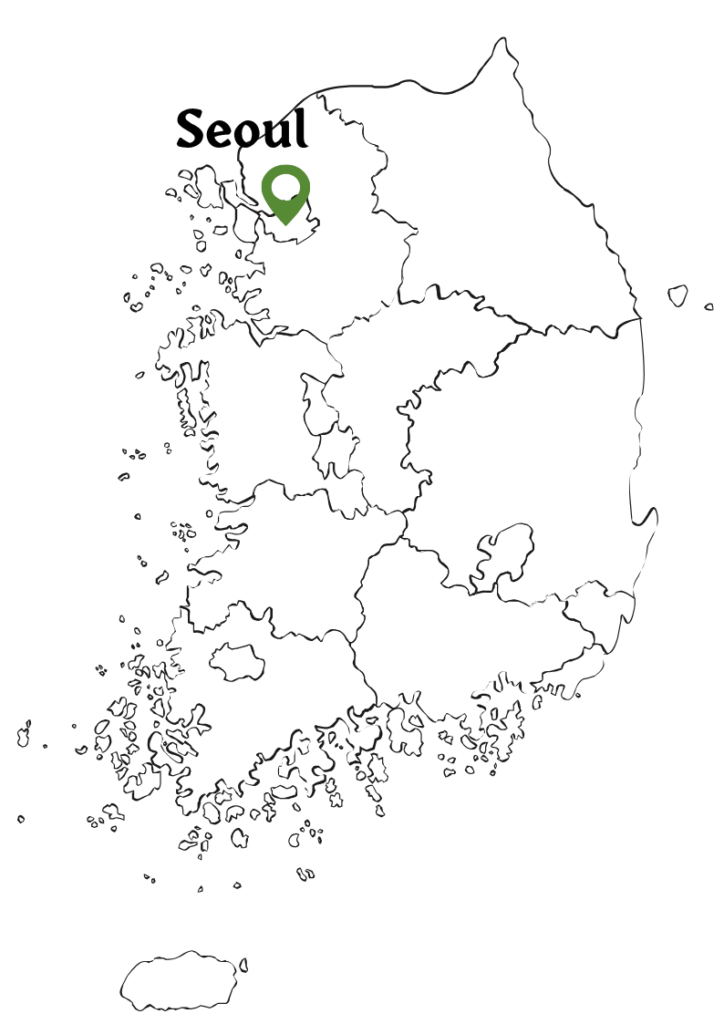
Seoul sits in the northwestern inland part of South Korea, so it usually becomes colder earlier than southern cities. Because it is farther inland, the air cools down quickly once seasonal temperatures begin to drop. November in Seoul often starts with crisp autumn weather but gradually shifts into an early winter pattern. Travelers can still enjoy beautiful city walks early in the month, but colder mornings become much more noticeable as the month goes on.
Week 1 (November 1–8)
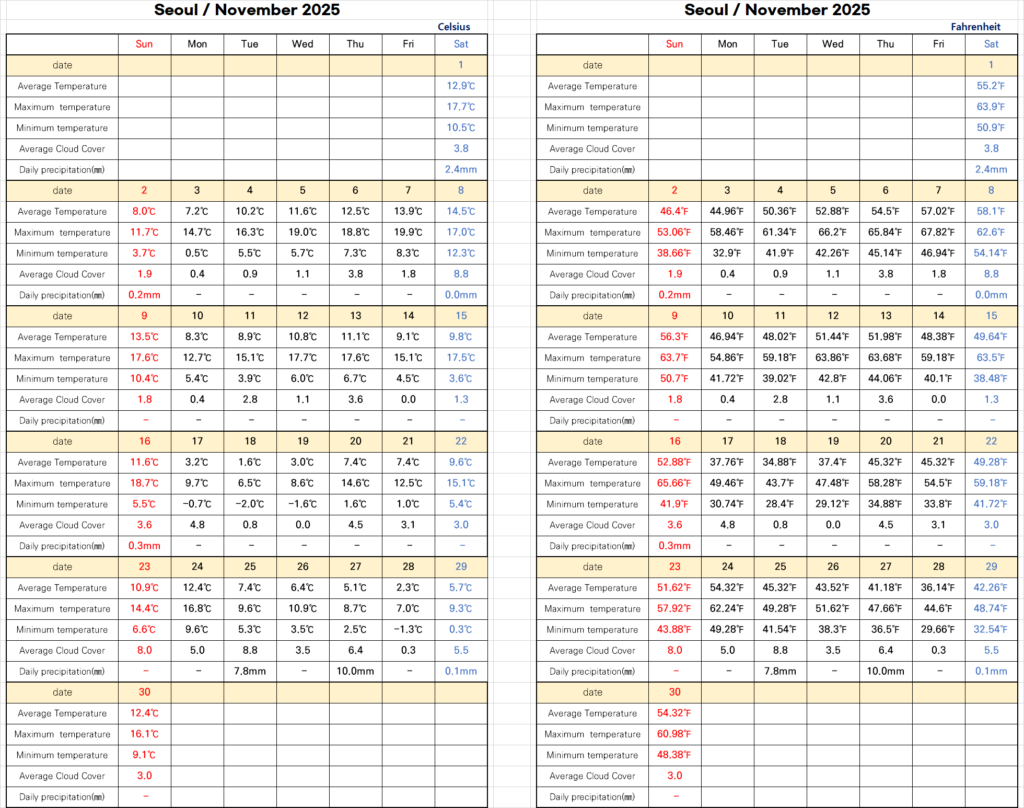
The month began with a cool but comfortable late-autumn feeling in Seoul. The highest temperature reached 19.9°C (67.8°F), while the lowest fell to 0.5°C (32.9°F). Rainfall was light, with 2.4mm on November 1 and 0.2mm on November 2. Daytime sightseeing felt pleasant, but early mornings already had a sharp chill.
Week 2 (November 9–15)
The second week stayed mostly clear and felt calmer without notable rain. The highest temperature reached 17.7°C (63.9°F), while the lowest dropped to 3.6°C (38.5°F). With no meaningful rainfall reported, the air felt dry and more classically autumn-like. Walking around palaces or shopping streets was comfortable in the afternoon, though evenings felt colder.
Week 3 (November 16–22)
This was the week when Seoul clearly began leaning toward early winter. The highest temperature climbed to 18.7°C (65.7°F), but the lowest suddenly dropped to -2.0°C (28.4°F). Rainfall was minimal at just 0.3mm on November 16. The strong contrast between mild daylight and freezing early morning air made layered clothing especially important.
Week 4 (November 23–28)
Late November brought a colder and wetter atmosphere to the city. The highest temperature reached 16.8°C (62.2°F), while the lowest fell to -1.3°C (29.7°F). Rainfall became more noticeable with 7.8mm on November 25 and 10.0mm on November 27. Because of the damp air and lower temperatures, the week felt colder than the numbers alone suggest.
Week 5 (November 29–30)
The final days of the month carried the same early-winter feeling that had built up in the previous week. Late-month highs remained around the mid-teens, near 16.8°C (62.2°F), while the coldest recent morning had already fallen to about -1.3°C (29.7°F). No additional major rainfall was noted for the final two days after the rainier stretch earlier in the week. Travel at this point felt clearly wintry in the morning and at night, even if daytime was still manageable.
Seoul in November starts as late autumn and ends with a real taste of early winter. The drop in morning temperatures is especially important, and by mid to late November, the city can feel much colder than first-time visitors expect. A knit top, sweatshirt, or sweater works early in the month, but later on, a coat or light padded jacket is a much safer choice. Scarves, thermal inner layers, and gloves become useful toward the end of November.
Seoul – Common Traveler Q&A
Q: Does it snow in Seoul in November?
A: Snow is not common in early November, but by late November the temperature can drop below freezing, so the first snow is sometimes possible. More often, travelers will see cold rain rather than snow. If you are visiting at the end of the month, it is better to prepare for winter-like mornings.
Q: Is November a good time to see autumn leaves in Seoul?
A: Yes, early November is usually one of the best times to enjoy late autumn colors in Seoul. Places like palace grounds, city parks, and mountain trails can still look beautiful at the start of the month. By mid to late November, many leaves have already fallen.
Q: Do I need a padded jacket in Seoul in November?
A: In early November, many travelers are comfortable with a coat or layered outfit. However, by mid to late November, mornings and nights can feel much colder, so a light padded jacket becomes very useful. If you feel cold easily, bringing one is a good idea.
Korea weather in November – Gangneung
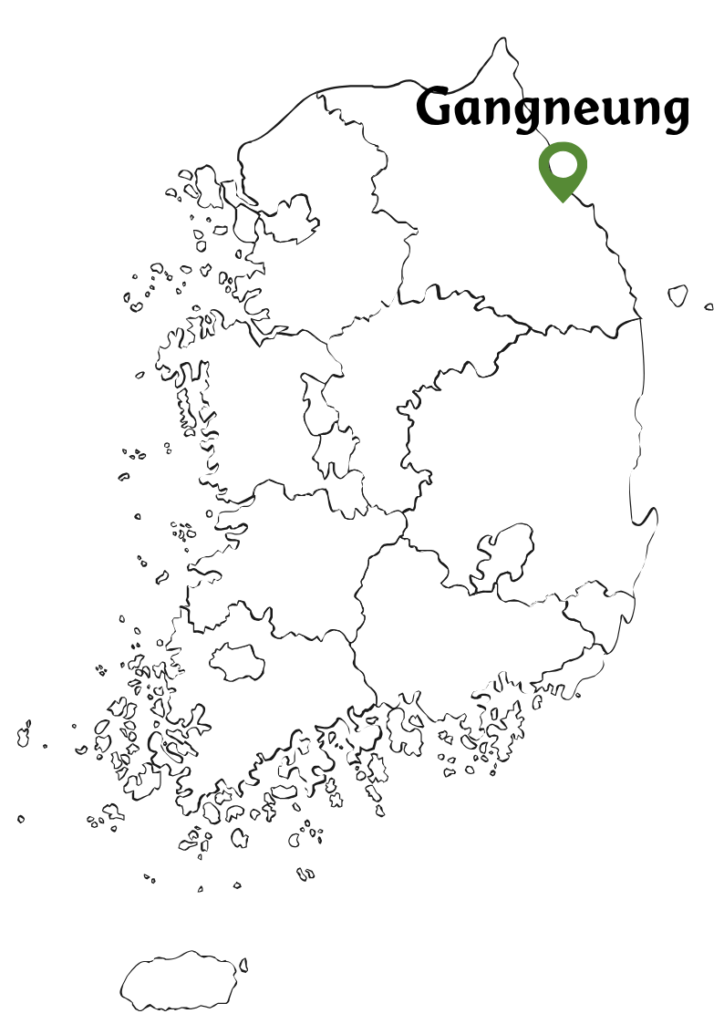
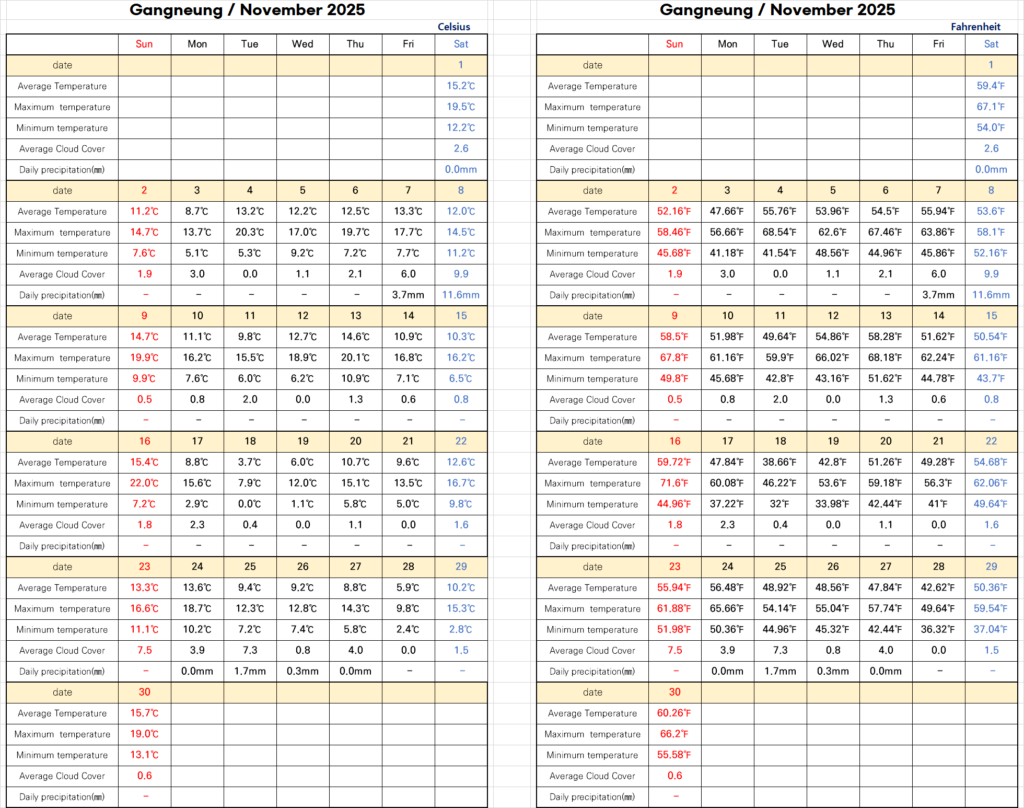
Gangneung is located on Korea’s east coast, where sunshine can make daytime temperatures feel warmer than expected. At the same time, sea breezes and changing air patterns can create noticeable differences between daytime and nighttime temperatures. This gives the city a slightly gentler afternoon feel than inland northern areas, but mornings can still become quite cold. November in Gangneung often feels bright and scenic, especially for travelers visiting the beach or watching the sunrise.
Week 1 (November 1–8)
The first week felt pleasantly bright overall, with a few wet moments toward the end. The highest temperature reached 20.3°C (68.5°F), while the lowest dropped to 5.1°C (41.2°F). Rainfall arrived with 3.7mm on November 7 and 11.6mm on November 8. The weather still felt enjoyable for coastal walks, although the damp air made it cooler after sunset.
Week 2 (November 9–15)
The second week stayed clear and comfortable for outdoor travel. The highest temperature reached 20.1°C (68.2°F), while the lowest fell to 6.0°C (42.8°F). No meaningful rainfall was recorded during this period. Sunny afternoons felt mild and inviting, but mornings still carried a late-autumn crispness.
Week 3 (November 16–22)
This week showed Gangneung’s dramatic temperature swing very clearly. The highest temperature rose to 22.0°C (71.6°F), while the lowest dropped all the way to 0.0°C (32.0°F). No rain was reported during the week. In the sun it could feel surprisingly warm, but early and late hours felt cold enough for a much heavier layer.
Week 4 (November 23–28)
The fourth week stayed mostly calm but became more obviously late-autumn in mood. The highest temperature reached around 19.0°C (66.2°F), while the lowest dropped to 2.4°C (36.3°F). Light rainfall passed through with 1.7mm on November 25 and 0.3mm on November 26. The coast still looked beautiful for travel, though the air felt cooler and more seasonal.
Week 5 (November 29–30)
The final days of November remained relatively mild in the daytime by east coast standards. The highest temperature reached 19.0°C (66.2°F), while the lowest recent late-month reading was 2.4°C (36.3°F). No major rainfall was reported for the last two days after the weak rain earlier in the week. Travel felt fresh and clear, with chilly mornings balanced by brighter afternoon conditions.
Gangneung in November often feels warmer during the day than travelers expect, but the daily temperature gap is the real challenge. You may feel comfortable in a long-sleeve shirt at noon and then need a much warmer layer by evening. A light sweater, fleece, or windproof jacket is a smart choice, especially near the sea. Layering matters more than wearing one very heavy item all day.
Gangneung – Common Traveler Q&A
Q: Is Gangneung colder than Seoul in November?
A: Not always. Daytime in Gangneung can sometimes feel milder than Seoul because of strong sunshine and east coast weather patterns. However, mornings can still be very cold, and sea wind can make it feel cooler than the temperature suggests.
Q: Is November a good time to visit the beach in Gangneung?
A: Yes, it is a very nice time for beach walks, cafés, and coastal sightseeing. It is too cold for normal swimming, but the sea views are often clear and beautiful in November. Sunrise trips are especially popular, though you will need warm clothes early in the morning.
Q: Can I surf in Gangneung in November?
A: Yes, some surfers still enjoy the east coast in November. The weather is much cooler, so a proper wetsuit is necessary. For general travelers, it is more of a sightseeing and scenic coast season than a swimming season.
Korea weather in November – Gyeongju
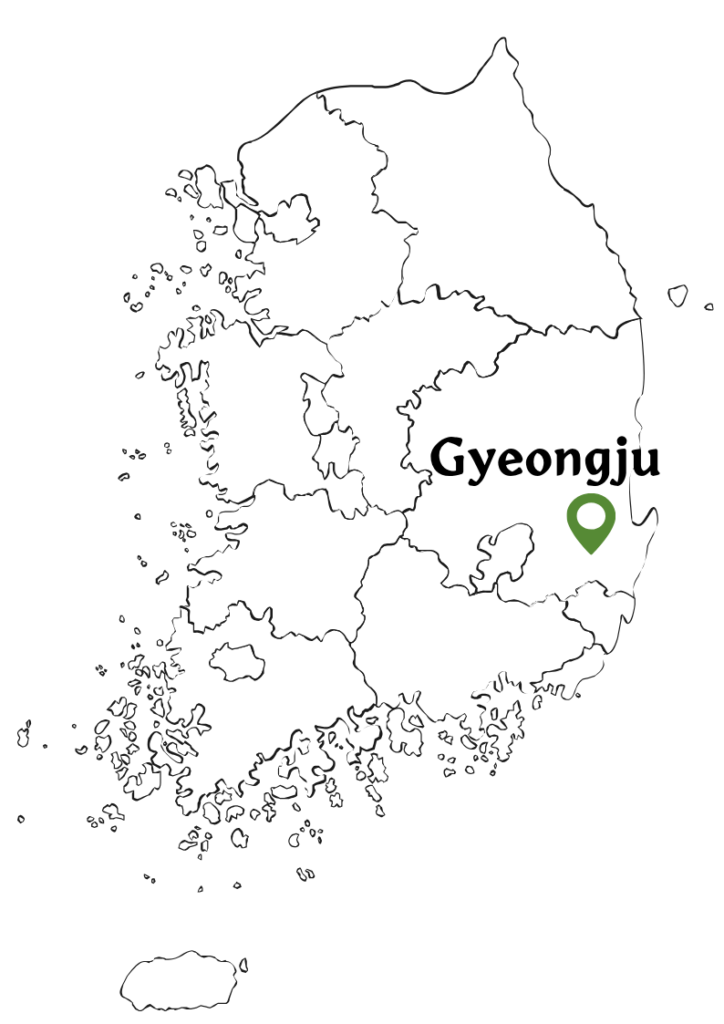
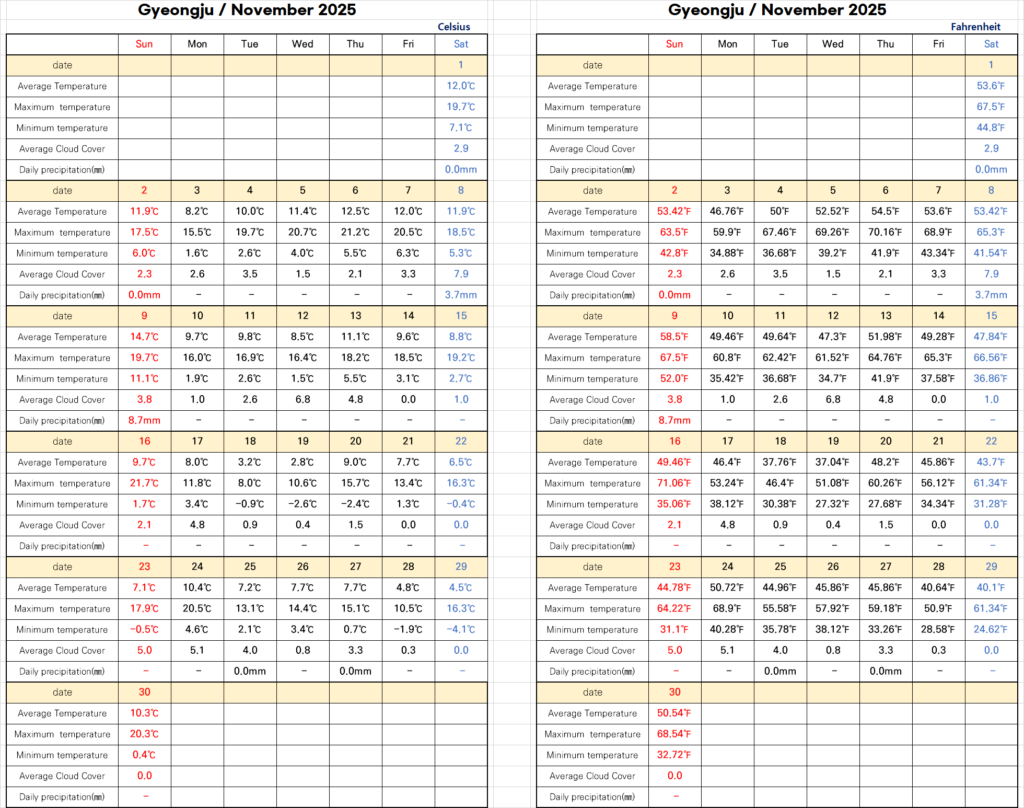
Gyeongju lies in the southeastern inland region and is known for wide daily temperature swings. Because it is not directly on the coast, warmth builds up during the day but escapes quickly after sunset. This means November in Gyeongju can feel almost mild in the afternoon and surprisingly cold by dawn. Travelers exploring historical sites often enjoy the sunny daytime weather but need to prepare carefully for morning and evening cold.
Week 1 (November 1–8)
The month opened with a classic inland late-autumn pattern in Gyeongju. The highest temperature reached 21.2°C (70.2°F), while the lowest dropped to 1.6°C (34.9°F). Rainfall was limited to 3.7mm on November 8. The contrast between warm daytime sightseeing and cold early mornings was already very noticeable.
Week 2 (November 9–15)
The second week continued the pattern of mild afternoons and cold starts. The highest temperature reached 19.7°C (67.5°F), while the lowest fell to 1.5°C (34.7°F). Rainfall came mainly on November 9 with 8.7mm. Temple visits and outdoor walks felt comfortable during daylight, but the air turned much colder once the sun went down.
Week 3 (November 16–22)
Mid-month brought one of the sharpest shifts of the season in Gyeongju. The highest temperature climbed to 21.7°C (71.1°F), while the lowest plunged to -2.6°C (27.3°F). No meaningful rainfall was noted during this stretch. It could feel almost warm during the day, but sunrise and nighttime conditions felt much closer to winter.
Week 4 (November 23–28)
The fourth week remained dry overall but increasingly cold in the mornings. The highest temperature reached 20.5°C (68.9°F), while the lowest dropped to around -4.1°C (24.6°F) in the late-month period. Rainfall was barely measurable, with only trace-level precipitation around November 25 and 27. The weather stayed pleasant for daytime touring, but the cold air before and after sunset felt serious.
Week 5 (November 29–30)
The final days of November kept the same pattern of mild sun and freezing dawn air. The highest temperature in the late-month stretch reached about 20.5°C (68.9°F), while the lowest fell to -4.1°C (24.6°F). No notable rainfall was reported at the very end of the month. Travelers would likely feel comfortable walking during the afternoon but need winter-ready layers at night.
Gyeongju – Common Traveler Q&A
Q: Why does Gyeongju feel so cold at night in November?
A: Gyeongju is inland, so temperatures rise under the sun during the day but drop quickly after sunset. That is why afternoons can feel mild while mornings and nights feel close to winter. Travelers often notice the daily temperature gap more here than they expected.
Q: Is November a good month for sightseeing in Gyeongju?
A: Yes, November is one of the best times to explore Gyeongju’s historical sites. The cool air makes long walks more comfortable during the daytime, and the autumn scenery adds to the atmosphere. You just need to be prepared for much colder conditions in the early morning and evening.
Q: What should I wear for night sightseeing in Gyeongju?
A: If you plan to visit places like Donggung Palace and Wolji at night, you should dress much warmer than you would during the afternoon. A coat, padded jacket, or at least several warm layers are recommended. Temperatures can feel much lower after sunset.
Korea weather in November – Busan
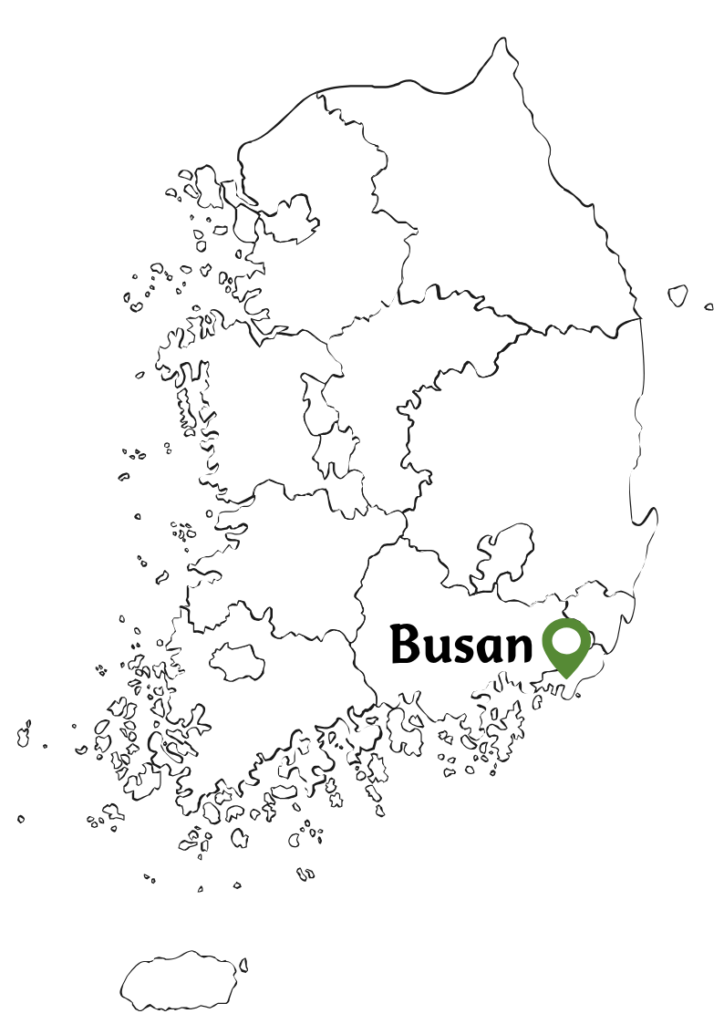
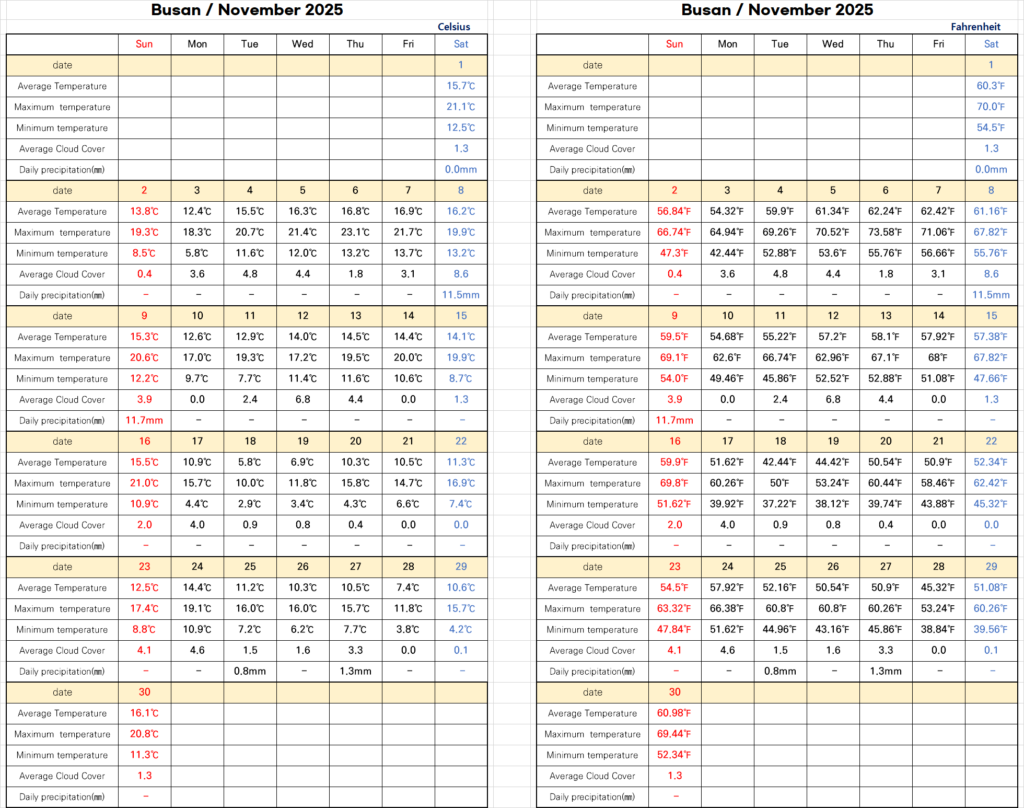
Busan is located on the southeastern coast and is strongly influenced by the sea, which keeps temperatures milder than in inland cities. Even in November, Busan usually avoids the harsher early-winter cold seen farther north. This makes it one of the easiest Korean cities for late autumn travel, especially for those who prefer gentler temperatures. Coastal breezes can still make evenings feel cool, but overall the city stays relatively comfortable.
Week 1 (November 1–8)
The first week of November felt mild and easy to enjoy in Busan. The highest temperature reached 23.1°C (73.6°F), while the lowest dropped to 5.8°C (42.4°F). Rainfall appeared mainly on November 8 with 11.5mm. Most daytime travel felt soft and pleasant, though the rain and sea breeze made the air cooler near the waterfront.
Week 2 (November 9–15)
The second week remained fairly gentle and seasonally comfortable. The highest temperature reached 20.6°C (69.1°F), while the lowest fell to 7.7°C (45.9°F). Rainfall was recorded at 11.7mm on November 9. After the rain passed, the city felt fresh rather than cold, which is one reason Busan is so appealing in late autumn.
Week 3 (November 16–22)
Mid-November stayed mild during the day but showed a slightly cooler edge at night. The highest temperature reached 21.0°C (69.8°F), while the lowest dropped to 2.9°C (37.2°F). No rainfall was reported during the week. Afternoon walks by the sea felt comfortable, while early mornings required a bit more warmth.
Week 4 (November 23–28)
The fourth week was mostly stable with just a little light rain late in the period. The highest temperature in the wider late-month stretch reached 20.8°C (69.4°F), while the lowest dropped to 3.8°C (38.8°F). Rainfall was slight, with 0.8mm on November 25 and 1.3mm on November 27. The overall travel feeling stayed mild and relaxed rather than truly cold.
Week 5 (November 29–30)
The last two days of the month ended on a pleasantly gentle note for Busan. The highest temperature reached 20.8°C (69.4°F), while the lowest recent late-month reading was 3.8°C (38.8°F). No major rainfall was noted at the very end of November. The city still felt very manageable for outdoor sightseeing, especially in the afternoon.
Summary & What to Wear in November in Korea (Busan) Busan in November is one of the mildest urban destinations in Korea. Compared with Seoul or inland cities, the month feels much softer, with fewer truly harsh cold spells. Travelers can usually do well with long sleeves, a cardigan, hoodie, or light coat. A windproof layer is still a good idea for evening walks along the beach or harbor.
Busan – Common Traveler Q&A
Q: Is Busan warm in November?
A: Busan is one of the milder major cities in Korea during November. It is not hot, but compared with Seoul, it usually feels much gentler and more comfortable. Many travelers find daytime weather very pleasant for walking.
Q: Can I swim at the beach in Busan in November?
A: The air may feel mild, but the sea is already too cold for most travelers to swim comfortably. November is better for beach walks, ocean views, and café visits rather than swimming. Beaches also feel breezier in the evening.
Q: Do I need heavy winter clothes in Busan?
A: Usually not in the same way you would in Seoul. A light coat, cardigan, hoodie, or windproof jacket is often enough for most travelers. Still, evenings by the sea can feel chilly, so one warm outer layer is helpful.
Korea weather in November – Jeju
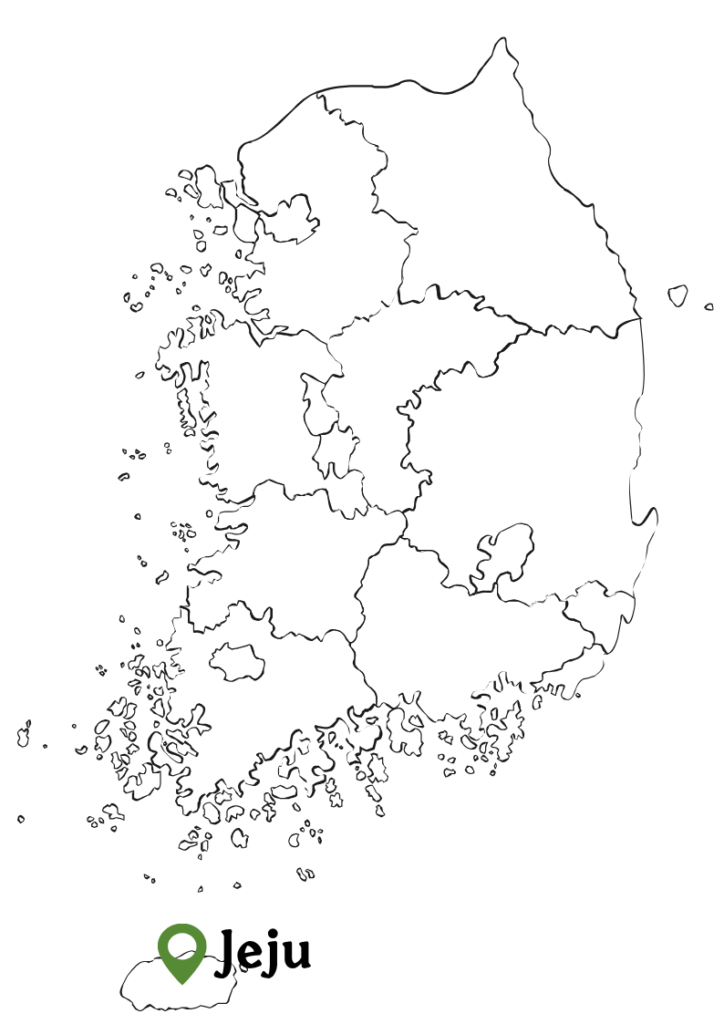
Jeju sits at the southern edge of Korea and usually has the mildest November temperatures in the country. Because it is surrounded by the sea, the island avoids severe cold, but wind and changing skies are part of the experience. November in Jeju often feels more like a cool extended autumn than the beginning of winter. Travelers usually find it comfortable overall, though sudden rain and strong gusts can make conditions feel cooler than expected.
Week 1 (November 1–8)
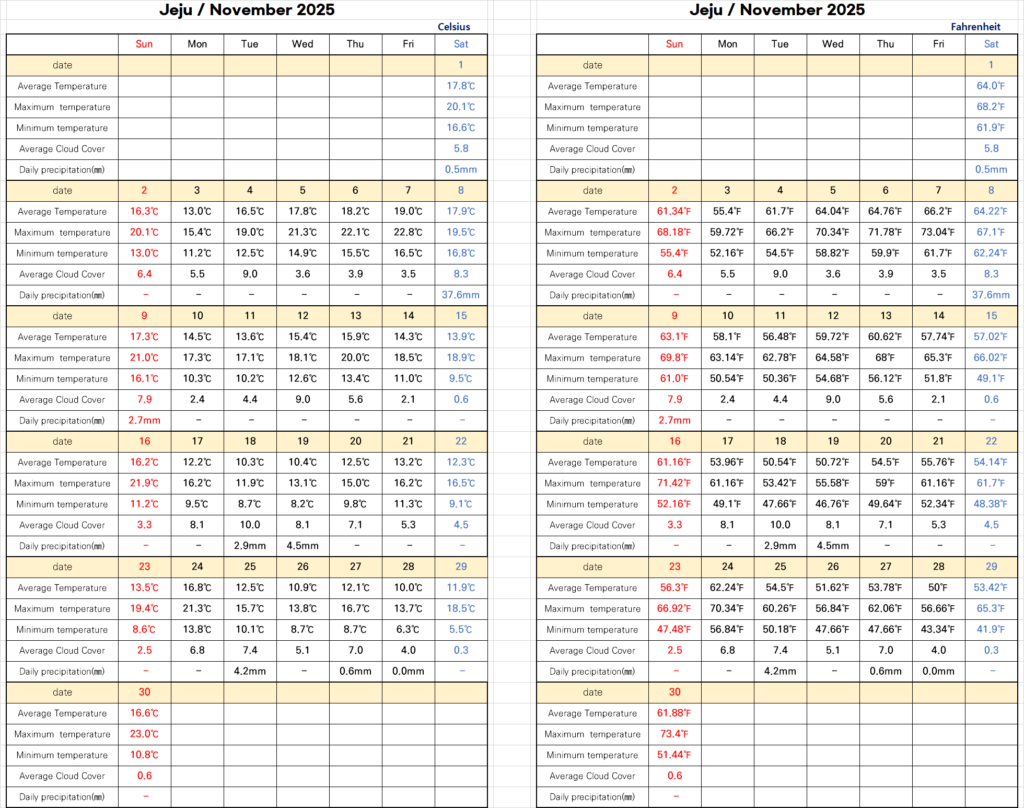
The first week felt mild overall but ended with a notably rainy spell. The highest temperature reached 22.8°C (73.0°F), while the lowest dropped to 11.2°C (52.2°F). Rainfall was significant on November 8 with 37.6mm. The island still felt relatively warm, but the wet weather and wind made it feel much less gentle than the temperature suggested.
Week 2 (November 9–15)
The second week stayed mild with a softer autumn feeling. The highest temperature reached 21.0°C (69.8°F), while the lowest fell to 9.5°C (49.1°F). Rainfall was light at 2.7mm on November 9. Outdoor travel remained comfortable, especially during the day, though wind could still make evenings feel cooler.
Week 3 (November 16–22)
Mid-month continued Jeju’s pattern of mild temperatures mixed with passing rain. The highest temperature reached 21.9°C (71.4°F), while the lowest dropped to 8.2°C (46.8°F). Rainfall came with 2.9mm on November 18 and 4.5mm on November 19. The weather stayed pleasant for sightseeing overall, but travelers needed to be ready for changing conditions.
Week 4 (November 23–28)
The fourth week remained relatively warm compared with the mainland. The highest temperature in the late-month period reached 23.0°C (73.4°F), while the lowest dropped to 5.5°C (41.9°F). Rainfall appeared again with 4.2mm on November 25 and 0.6mm on November 27. Jeju still felt mild for late autumn, although wind and rain could briefly make it feel much cooler.
Week 5 (November 29–30)
The final days of November ended on a mild note by Korean standards. The highest temperature reached 23.0°C (73.4°F), while the lowest late-month reading was 5.5°C (41.9°F). No major new rainfall was reported for the last two days after the earlier showers. Travel felt comfortable overall, especially in the daytime, but outerwear was still useful because of island winds.
Summary & What to Wear in November in Korea (Jeju) Jeju in November is generally the mildest of the cities in this guide, but it is not always as light as the temperature alone suggests. Wind and passing rain can quickly change how the weather feels, especially near the coast or in open natural areas. Long sleeves, light knits, and a cardigan or jacket usually work well for most travelers. Bringing a windbreaker or waterproof outer layer is especially useful on Jeju.
Jeju – Common Traveler Q&A
Q: Is Jeju the warmest place in Korea in November?
A: Jeju is usually one of the warmest places in Korea during November. Daytime temperatures often stay mild, and the island does not usually feel as harsh as inland cities. However, wind and passing rain can make it feel cooler than expected.
Q: Do I need to bring an umbrella to Jeju in November?
A: It is a good idea to prepare for light rain, but a windproof jacket or waterproof outer layer is often more useful than a regular umbrella. Jeju can be quite windy, and umbrellas are not always convenient there. A hooded jacket is often the better option.
Q: Is Hallasan hiking possible in November?
A: Yes, but mountain weather is very different from the weather in Jeju City or coastal areas. Even if the island feels mild, higher elevations can feel much colder and may even have frost or early snow conditions. Proper hiking clothes and warm layers are important.
Korea weather in November / what to wear in November in Korea really depends on where you travel, but one pattern stays consistent across the country: the month begins like late autumn and ends much closer to early winter. Seoul and Gyeongju show stronger cold mornings, Gangneung has large day-to-night swings, Busan stays comfortably mild, and Jeju remains the gentlest overall but windier and more changeable. For most travelers, the best approach is smart layering, comfortable walking clothes, and a warmer outer layer for late afternoons and evenings.



This has been Seoul Mate Lenny, sharing a closer look at Korea’s weather across different cities. I hope this guide helps anyone planning a trip to Korea better understand the climate and prepare for their journey.