January is the peak of winter in South Korea, and understanding Korea Weather in January / what to wear is essential for travelers. Although the country is relatively small, winter conditions differ noticeably depending on geography, location, and distance from the sea.
Overall, Korea Weather in January is cold, dry, and often windy, with temperatures frequently dropping below freezing. Inland cities such as Seoul typically experience stronger cold spells, while southern and coastal areas like Busan, Gangneung, and Jeju tend to record milder winter temperatures, though they remain firmly within winter conditions. These regional differences play an important role when deciding what to wear, especially for travelers planning extended outdoor activities.
This guide examines January weather patterns based on recent weather records in Seoul, Busan, Gangneung, Gyeongju, and Jeju. By reviewing past climate data, each section highlights temperature trends and practical winter clothing tips. Understanding Korea Weather in January / what to wear helps travelers prepare more accurately and enjoy Korea’s winter season with greater comfort and confidence.
Korea weather in January – Seoul
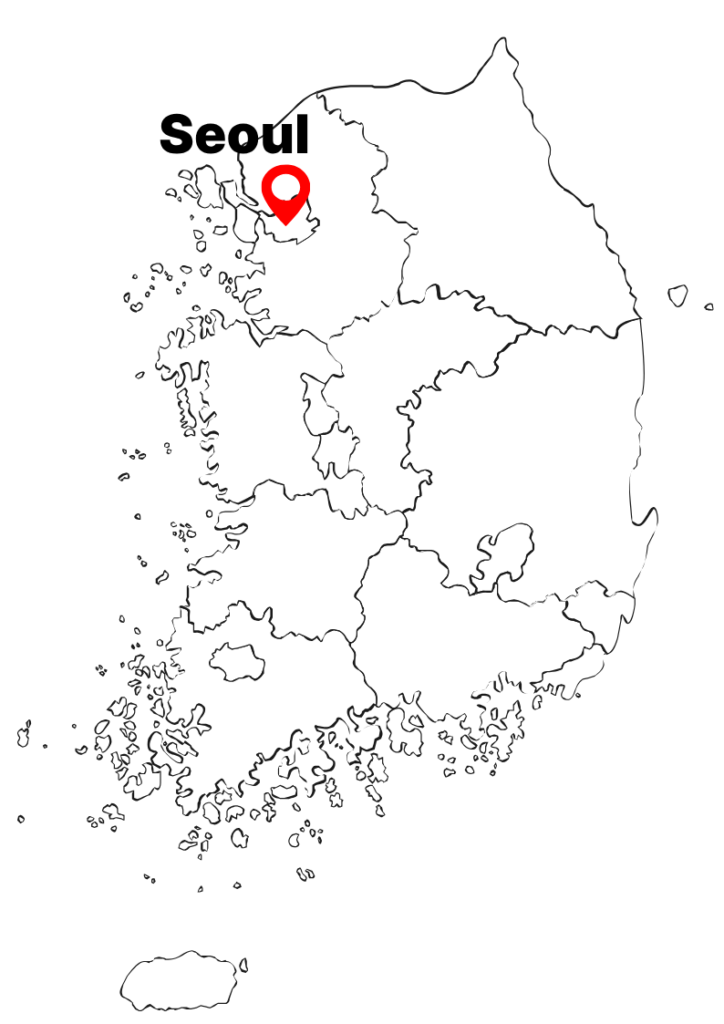
Seoul is located in the northwestern part of South Korea and is influenced by a typical inland continental climate. Because the city is far from the ocean and close to the northern landmass, winter temperatures drop significantly compared to southern or coastal regions.
One of the defining features of Seoul’s winter climate is the presence of strong Siberian winds. These cold air currents blow down from the north and often make outdoor temperatures feel much colder than the actual readings. Areas such as open streets, riverbanks, and palace grounds are especially exposed to these winds.
Another important characteristic is low humidity and very dry air. January is the driest month in Seoul, which can cause dry skin and lips. While dryness does not directly affect temperature, it can make cold conditions feel harsher, reinforcing the need for proper winter clothing.
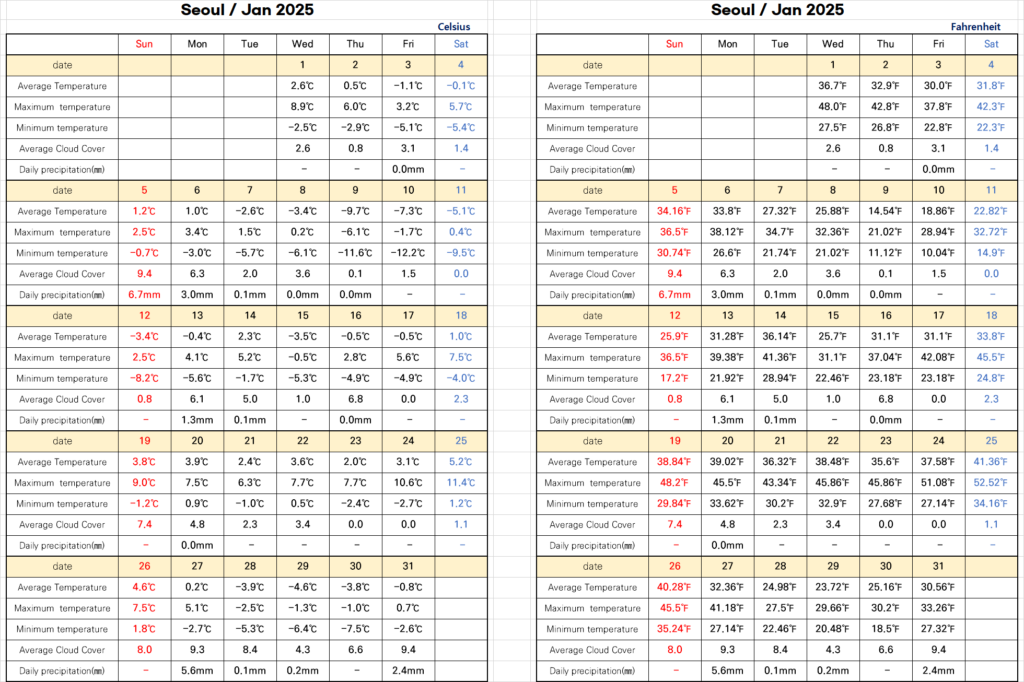
Seoul Weather in January 2025
Seoul’s past winter climate helps predict Korea Weather in January for the upcoming year. Last January, the coldest period occurred in the second week, with temperatures dropping to around -9°C (16°F). Throughout the month, temperatures moved between below-freezing and above-freezing levels, generally ranging from -5°C to 5°C (23°F–41°F).
Rainfall was minimal, and the weather remained mostly dry with occasional light snow. Based on these patterns, January 2025 in Seoul is expected to show similar conditions. When planning for Korea Weather in January / what to wear, travelers should prepare winter clothing such as a padded coat, warm gloves, thick socks, and insulated sneakers. On particularly cold days, outdoor activities may feel uncomfortable due to the harsh winter cold.
Korea weather in January – Gyeongju
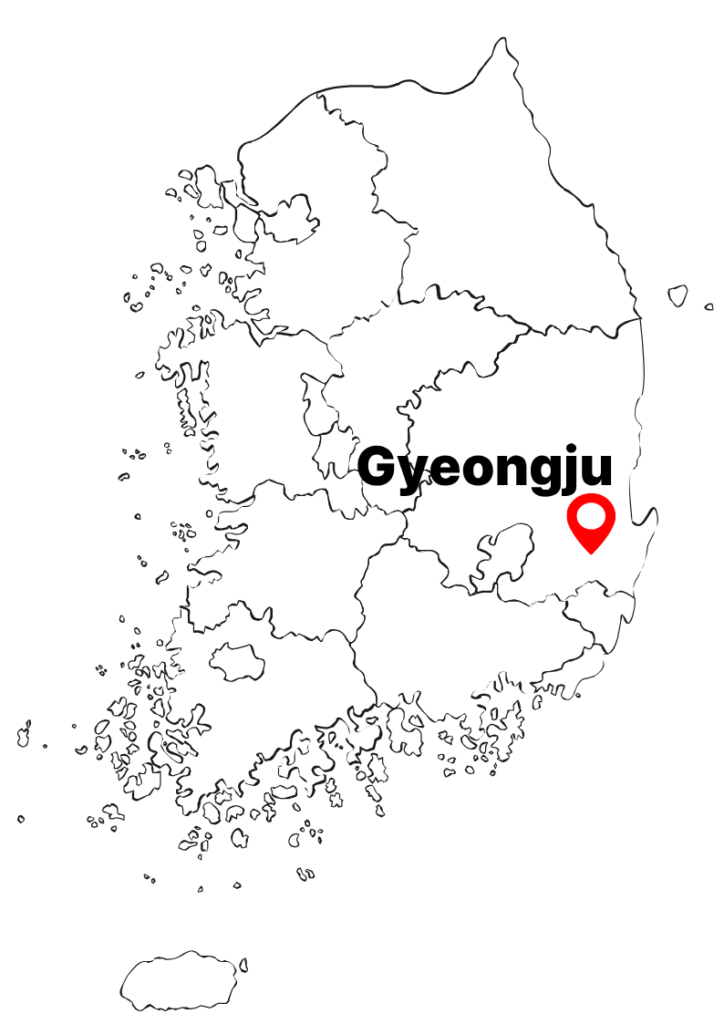
Gyeongju is located inland in southeastern South Korea, north of Busan. On the map, Gyeongju sits away from the coastline, surrounded by low mountains and plains. Its inland position means it is less affected by ocean winds, but temperatures can drop sharply at night. Gyeongju has a continental inland climate with cold, dry winters and relatively calm wind conditions.
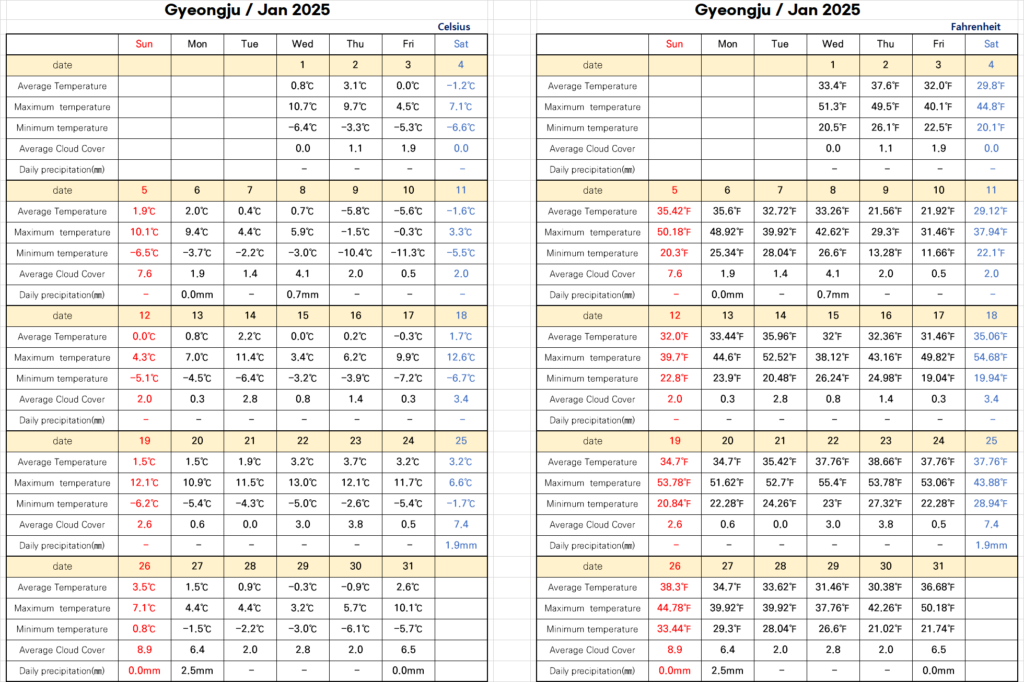
Gyeongju Weather in January 2025
Last January, Gyeongju experienced slightly milder temperatures than Seoul, although cold conditions were still common. The coldest period occurred during the second week of January, when average temperatures dropped to around -6°C (21°F). Throughout the month, temperatures shifted between above-freezing and below-freezing levels, with rainfall being virtually nonexistent. Overall, average temperatures hovered around 0°C (32°F).
However, short cold spells pushed minimum temperatures down to approximately -11°C (12°F) during the second week. In contrast, milder conditions appeared toward the end of the month, with daytime highs reaching up to 10°C (50°F) during the fourth week.
Considering these trends, the outlook for January 2025 in Gyeongju suggests similar variability. When thinking about Korea Weather in January / what to wear, winter-ready clothing remains essential. A padded coat, warm hat, gloves, and thick socks are strongly recommended. On particularly cold days, extended outdoor sightseeing may feel uncomfortable, making it advisable to limit time spent outside despite Gyeongju’s walkable historic sites.
Korea weather in January – Busan
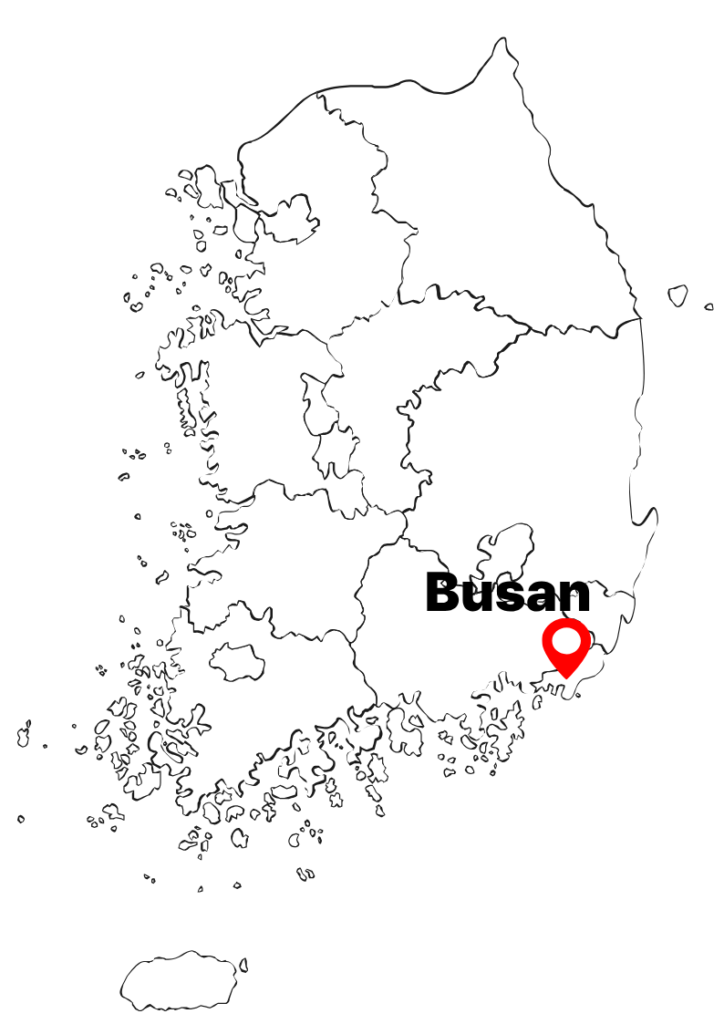
Busan is located on the southeastern coast of South Korea, facing the East Sea. On the map, Busan sits at the southern edge of the Korean Peninsula and functions as Korea’s largest port city. Its coastal position means the city is directly influenced by ocean currents and sea winds throughout the year.
Because Busan is surrounded by the sea on three sides, its winter climate is milder than inland cities, but wind exposure is much stronger along beaches and coastal roads.
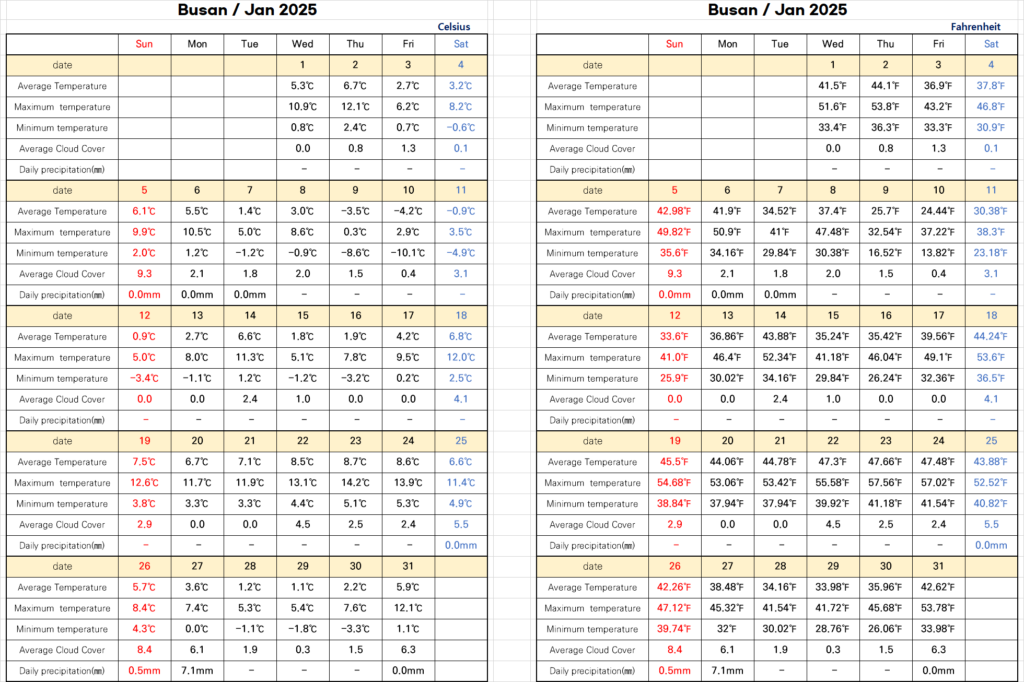
Busan Weather in January 2025
Last January, Busan recorded warmer temperatures than Seoul, with snowfall being extremely rare. Although the coldest period also occurred during the second week of January, average temperatures only dipped to around -3°C (27°F). For most of the month, temperatures stayed above freezing, and there were even brief moments when daytime highs reached up to 14°C (57°F). While the second week remained the coldest, overall conditions were considerably milder than in inland cities.
Based on these patterns, January 2025 in Busan is expected to follow a similar trend. When considering Korea Weather in January / what to wear, winter clothing is still recommended. A padded coat, warm hat, gloves, and thick socks provide sufficient warmth for most days. However, compared to other regions, Busan allows for slightly lighter layering depending on personal cold tolerance. That said, because the city is known for strong coastal winds, it is advisable to bring a warm outer layer rather than dressing too lightly, especially when spending time near the sea.
Korea weather in January – Gangneung
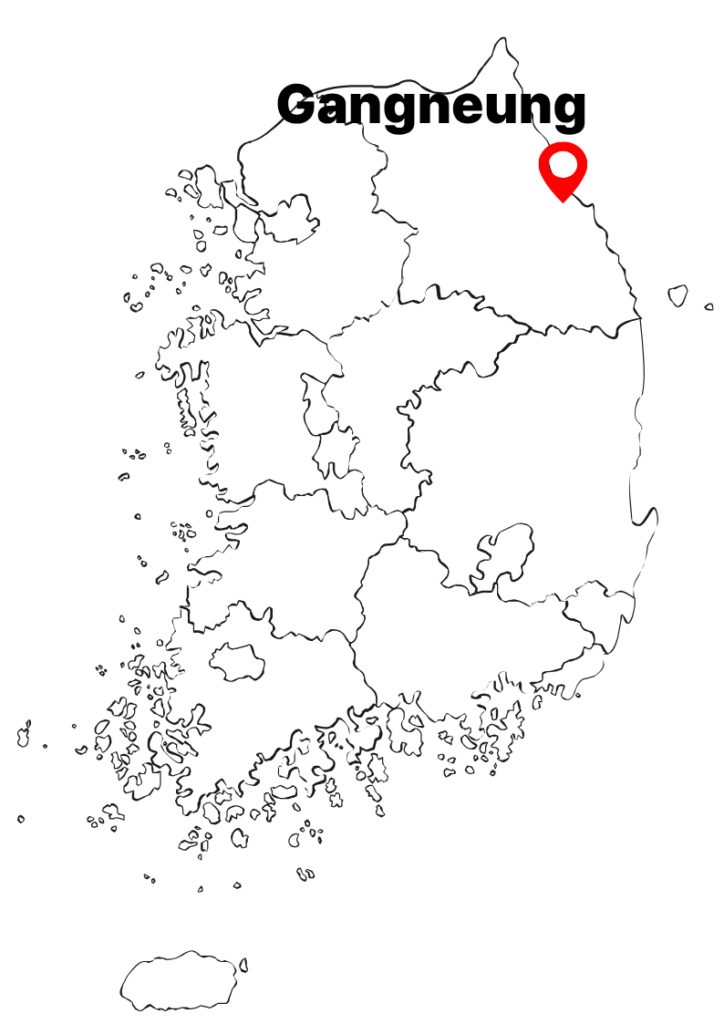
Gangneung is located on the east coast of South Korea, between the East Sea and the Taebaek Mountain Range. On the map, Gangneung sits northeast of Seoul and directly faces the sea, with mountains immediately to its west. This geographic position causes cold sea air to collide with mountain weather systems, resulting in heavier snowfall during winter.
Gangneung experiences cold coastal winters with frequent snow, making it one of the snowiest major cities in Korea.
Gangneung Weather in January 2025
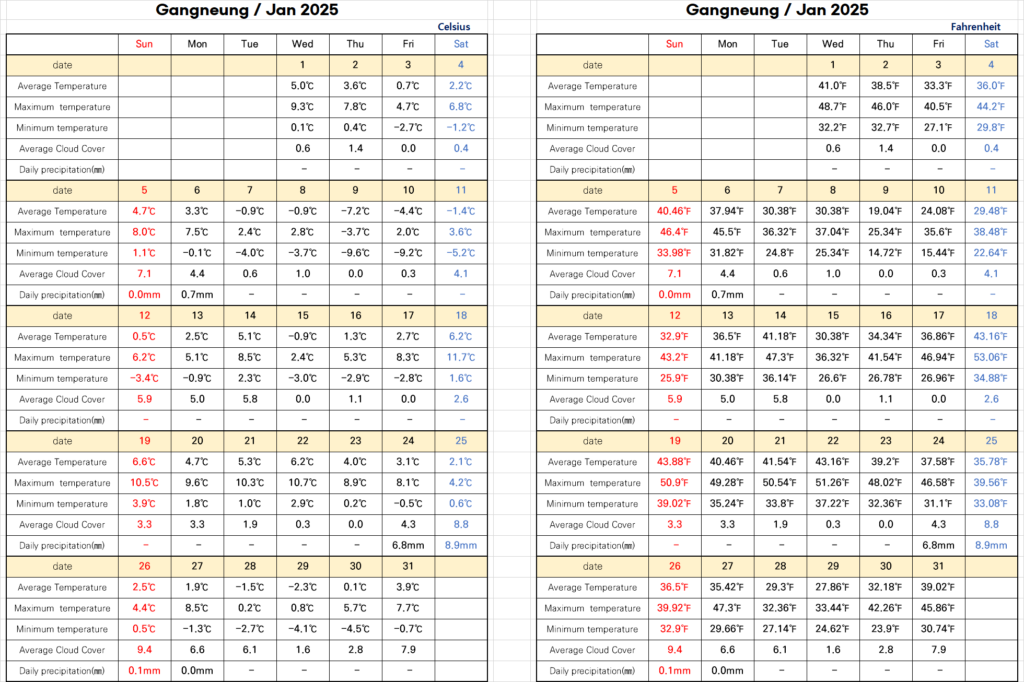
Last January, Gangneung recorded slightly milder overall temperatures than Seoul, although winter cold was still present. The coldest period again occurred during the second week of January, when average temperatures dropped to approximately -9.6°C (15°F). Outside of this short cold spell, conditions remained relatively moderate, with daytime temperatures often staying around 5°C (41°F).
Because Gangneung is close to the sea, strong coastal winds are common in winter. While this coastal influence can soften extreme cold on some days, it can also make the weather feel colder than expected. For travelers planning a winter trip to Korea, choosing destinations like Gangneung, Jeju, or Busan—where temperatures tend to be slightly higher than inland regions—can be a reasonable option.
Looking ahead to January 2025, similar patterns are expected. When planning for Korea Weather in January / what to wear, winter clothing remains essential. A padded coat, warm hat, gloves, and thick socks are strongly recommended. Due to the cold sea winds, swimming is not advised during this season, and insulated sneakers or warm walking shoes are ideal for staying comfortable while exploring the coastal city.
Korea weather in January – Jeju
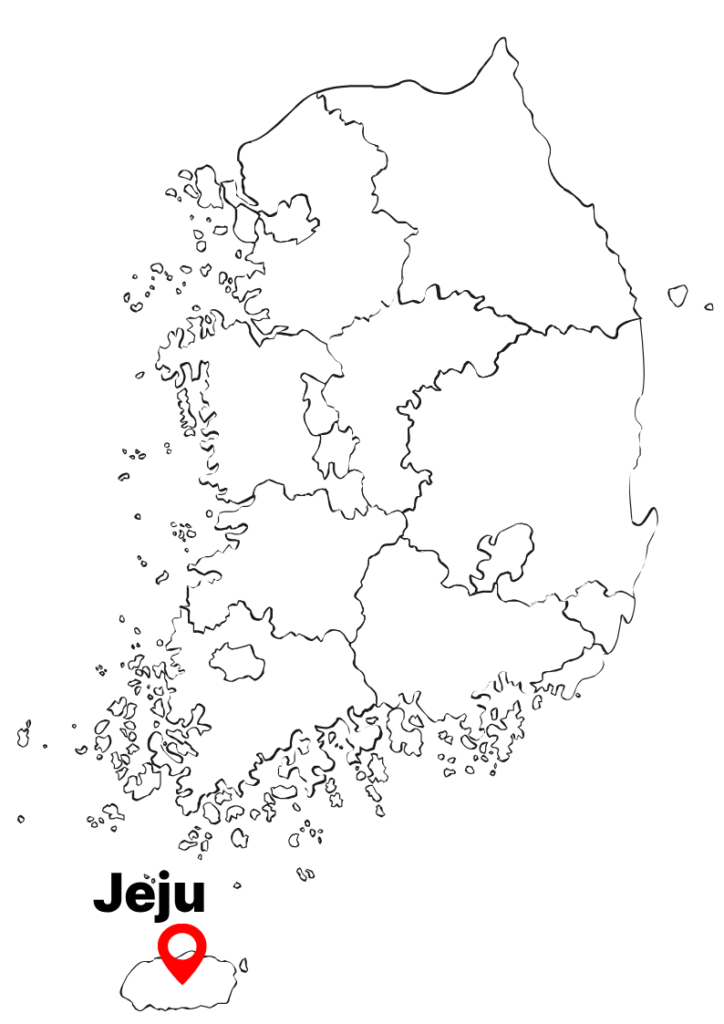
Jeju is located south of the Korean Peninsula, completely separated from the mainland. On the map, Jeju Island sits in the Korea Strait and is surrounded by ocean on all sides. Its island location gives Jeju a maritime climate, but strong winds are a defining feature in winter. Jeju has milder winter temperatures, but frequent wind and sudden weather changes due to ocean influence.
Jeju Weather in January 2025
Jeju’s winter climate is notably different from mainland cities. Due to its surrounding seas and volcanic terrain, Jeju experiences frequent weather changes, with a mix of wind, rain, and occasional snow. This creates a very different atmosphere compared to inland regions, making Jeju an interesting case when discussing Korea Weather in January and planning what to wear.
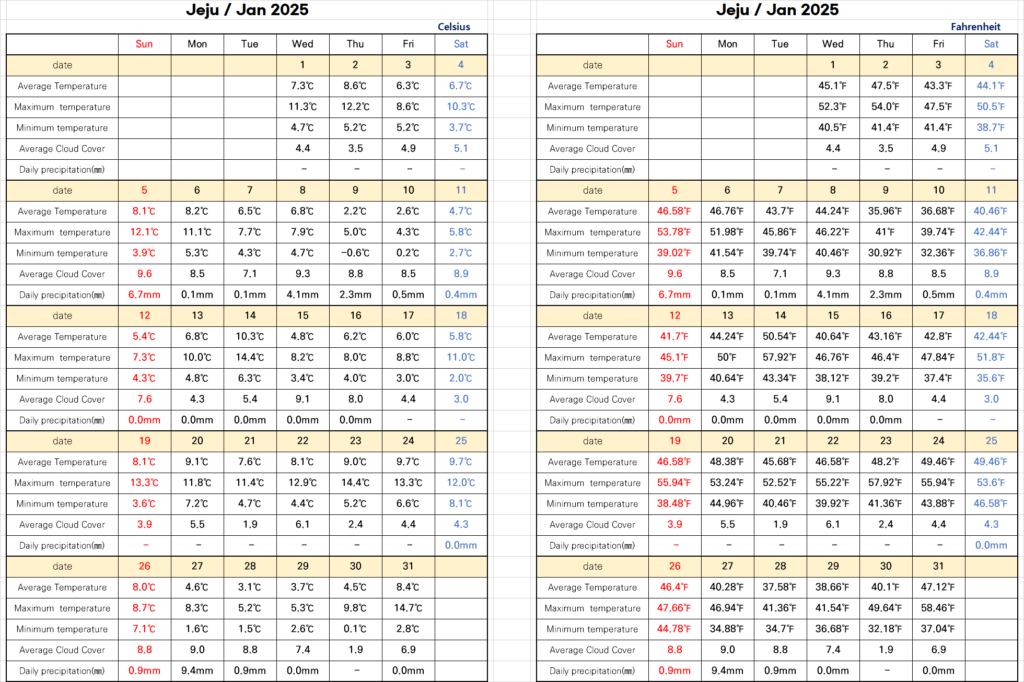
Last January, Jeju recorded warmer overall temperatures than most mainland areas. Although the second week of January was the coolest period, temperatures stayed above freezing on nearly all days, except for one brief drop. There were moments when daytime highs reached around 14°C (57°F), while most days hovered close to 10°C (50°F). These mild conditions made January a surprisingly comfortable time for travel, despite winter being in full swing elsewhere in Korea. Rainfall was more noticeable than in inland cities, with rain occurring during the second week, which is common for Jeju due to its maritime climate. Snow was limited and mainly affected higher elevations rather than coastal areas.
Looking ahead to January 2025, similar patterns are expected. When considering Korea Weather in January, what to wear, winter clothing is still recommended. A padded coat, warm hat, gloves, and thick socks provide enough warmth for most days. However, depending on personal sensitivity to cold, lighter layering may be possible. Since wind and rain are common, choosing warm but practical outerwear is key to staying comfortable while exploring the island.
We’ve taken a closer look at January temperatures in some of South Korea’s major cities, and I hope this guide helps you plan your winter trip to Korea with confidence. If you’re visiting in January, a little preparation goes a long way in staying warm and enjoying the season. This has been your Seoul mate, Lenny. Thanks for reading, and safe travels!
You might also enjoy reading this article!