If you are planning a winter trip and searching for Korea weather in February, you will quickly notice that February is one of the most changeable months in South Korea. It marks the period when deep winter begins to ease, though sudden cold waves can still occur.
In February 2025, this transition was especially clear. The month began with severe cold in northern and inland areas, while southern regions and Jeju Island experienced frequent rain rather than snow. Around mid-February, rain and brief warming were followed by another short cold spell, before temperatures rose quickly in the final week, making many areas feel more like early spring.
Because of this pattern, understanding Korea weather in February is important when deciding what to wear Korea in February, particularly for travelers visiting multiple cities. Recent weather trends also suggest that February in Korea is becoming less consistently cold, with increasing temperature swings that require flexible clothing choices.
Table of Contents
Click on the city you’re curious about to see the February weather.
Korea weather in February—Seoul
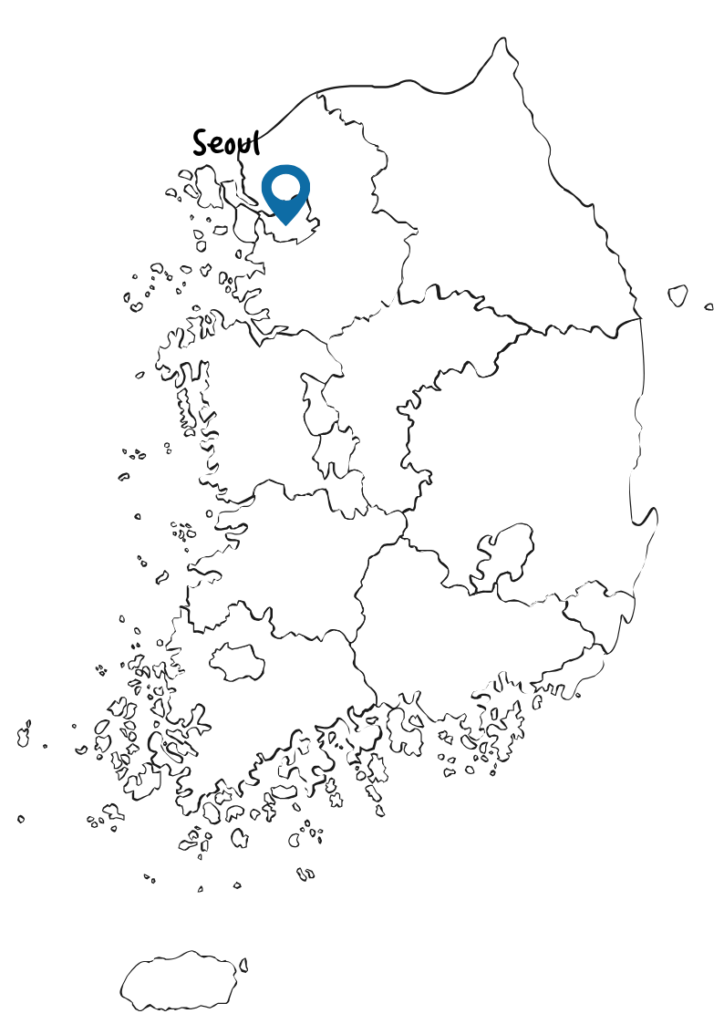
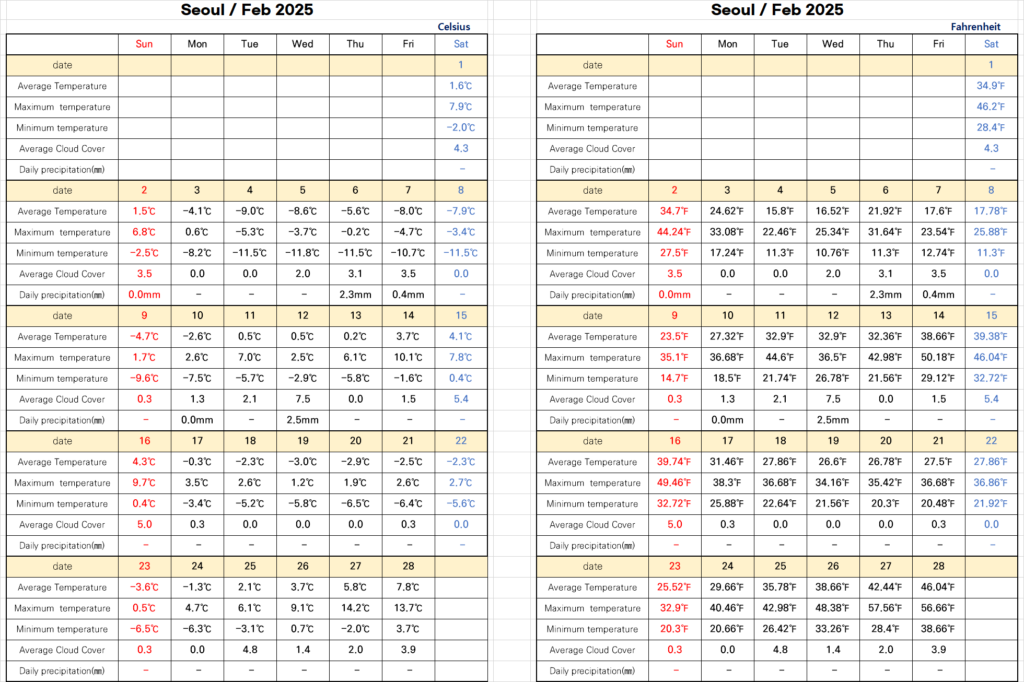
Seoul experienced the coldest overall conditions among the five cities. February began with a powerful cold wave that defined the entire first week. During the first week (Feb 1–8), temperatures dropped sharply. Between February 4 and 5, morning lows reached -11.5°C to -11.8°C (11°F to 10.8°F), making it the coldest period of the month. Although snowfall was minimal, light snow and rain were recorded on the 6th and 7th, adding to the bitter cold feeling.
In the second week (Feb 9–15), temperatures slowly recovered but remained cold overall. The standout day was February 14, when daytime temperatures briefly reached 10.1°C (50.2°F), offering a short break from winter. Light rain fell around February 12. The third week (Feb 16–22) saw another drop in temperatures, with early morning lows returning to around -6°C (21.2°F). This period was notably dry, which made the cold feel sharper, especially with wind.
By the fourth week (Feb 23–28), winter finally weakened. Temperatures climbed steadily, and on February 27–28, daytime highs reached around 14°C (57.2°F), signaling a clear transition toward spring.
From a traveler’s perspective, Korea weather in February in Seoul demands serious winter preparation early in the month, while lighter clothing becomes more practical toward the end.
Korea weather in February—Gyeongju
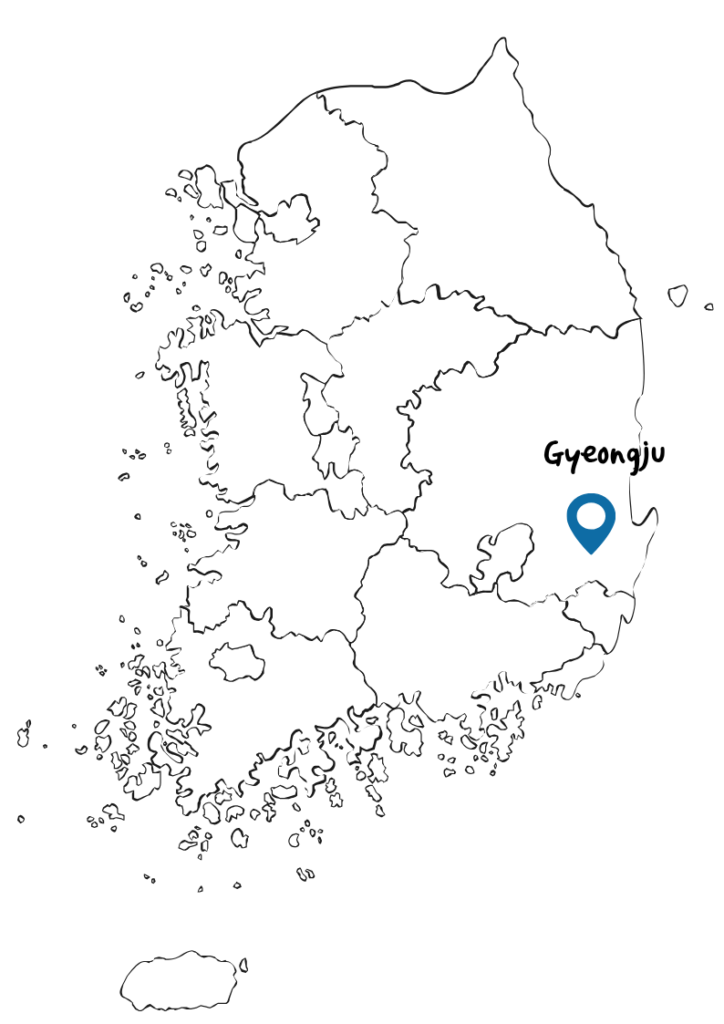
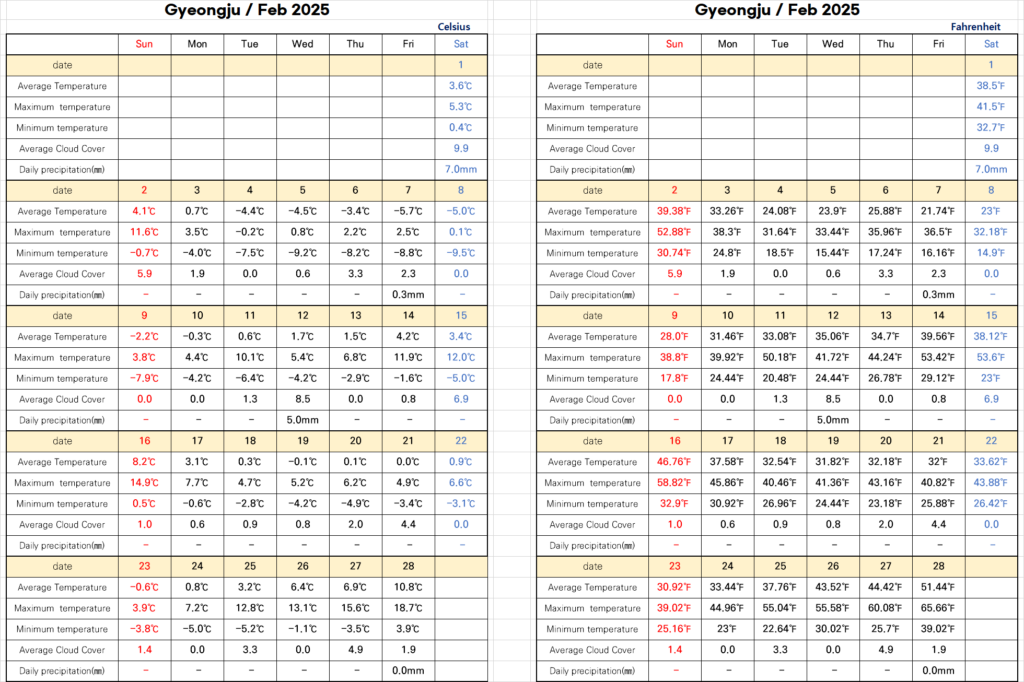
Gyeongju Weather in February – Large Daily Temperature Gaps
Gyeongju is known for its inland basin geography, and February 2025 clearly reflected this. The first week included rain on February 1, followed by a sharp temperature drop.
On February 8, morning temperatures dropped to -9.5°C (14.9°F), making early mornings feel quite cold. During the second week, the weather became more stable, with daytime temperatures often rising above 10°C (50°F), although rain fell on February 12. By the third week, February 16 reached 14.9°C (58.8°F) during the day, but temperatures still dropped sharply at night, creating noticeable day-to-night temperature differences. In the fourth week, Gyeongju warmed quickly, and on February 28, daytime temperatures reached 18.7°C (65.7°F)—the warmest among all five cities.
This makes Korea weather in February in Gyeongju especially tricky, as mornings and afternoons require very different clothing choices.
Korea weather in February—Busan
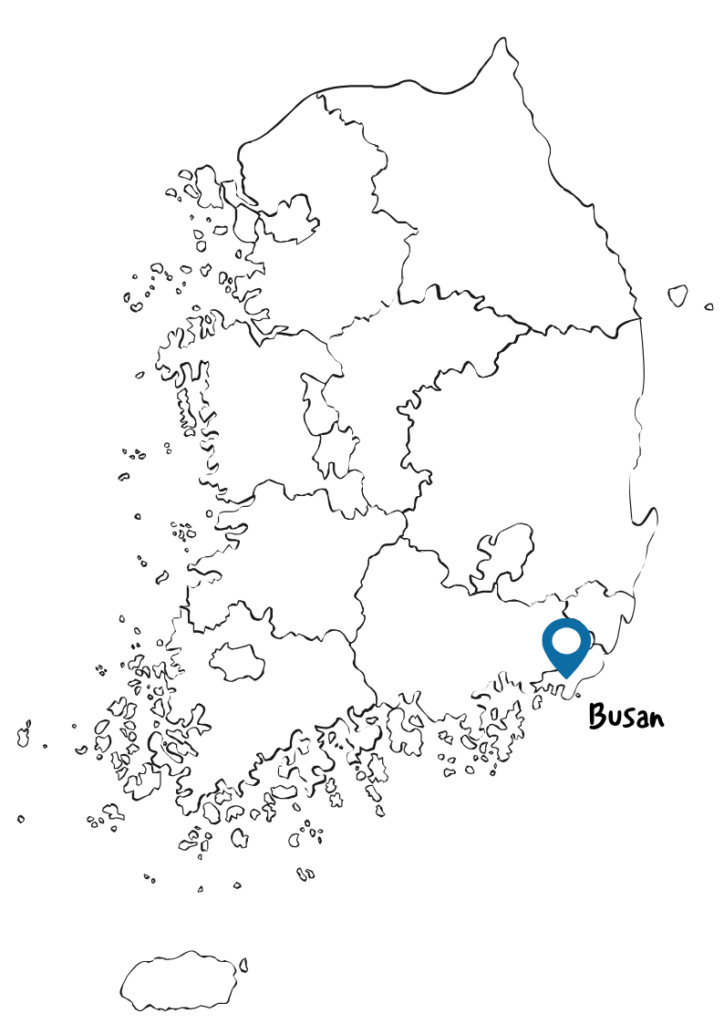
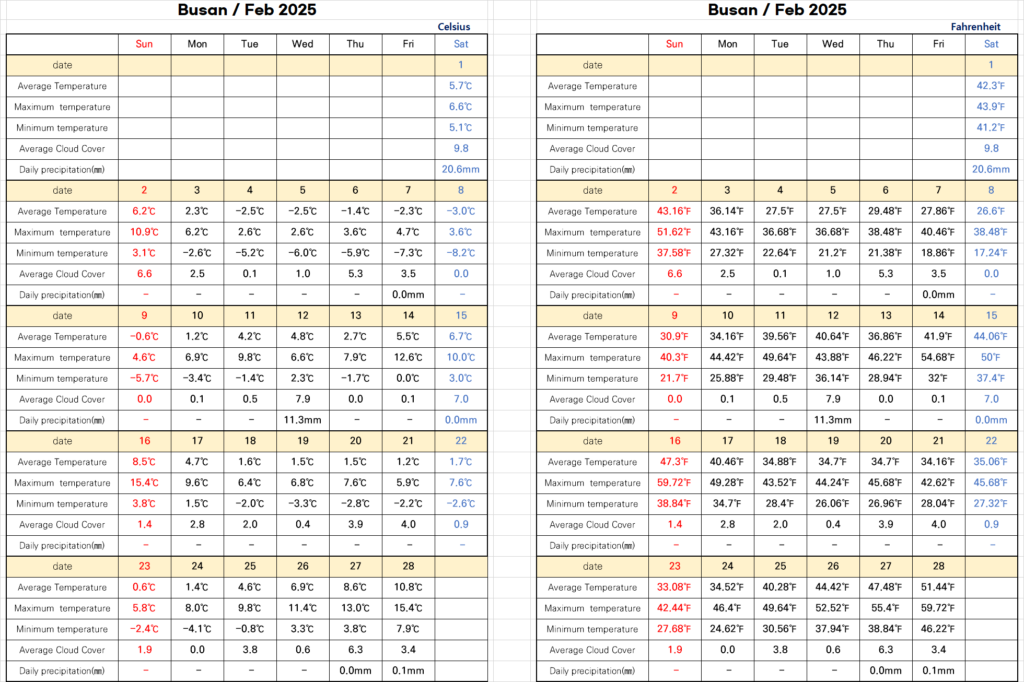
Busan Weather in February – Heavy Rain Early, Mild Finish. Busan was noticeably warmer than Seoul throughout February, but rainfall played a major role in shaping its weather.
The first week (Feb 1–8) began with a notable weather event, as 20.6mm of rain fell on February 1. Although temperatures dropped below freezing on several mornings—ranging from -5°C to -8°C (23°F to 17.6°F)—Busan felt less severe compared to northern cities like Seoul. During the second week (Feb 9–15), conditions became noticeably milder. Daytime temperatures often stayed above 10°C (50°F), peaking at 12.6°C (54.7°F) on February 14. Another round of rain passed through on February 12.
The third week (Feb 16–22) opened with a warm day on February 16, when temperatures reached 15.4°C (59.7°F), before cooling again later in the week. In the final week (Feb 23–28), Busan continued to warm steadily, finishing the month at around 15.4°C (59.7°F) during the day. By this point, heavier winter clothing often felt too warm in the afternoon.
For visitors, Korea weather in February in Busan is best described as winter turning into spring, with rain being a more important factor than snow.
Korea weather in February—Gangneung
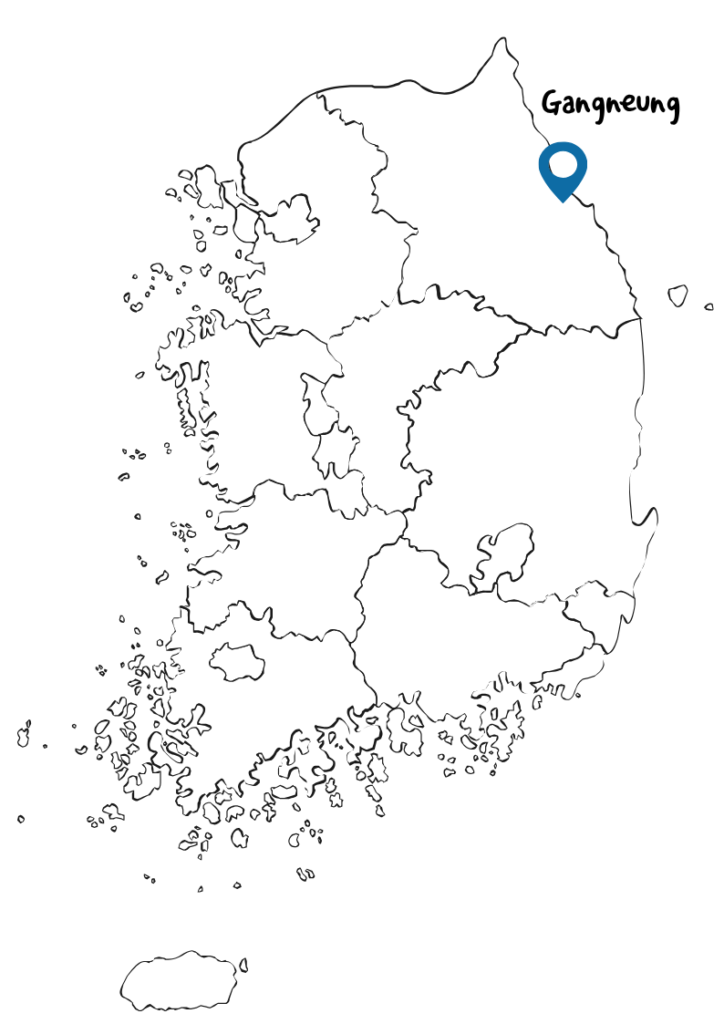
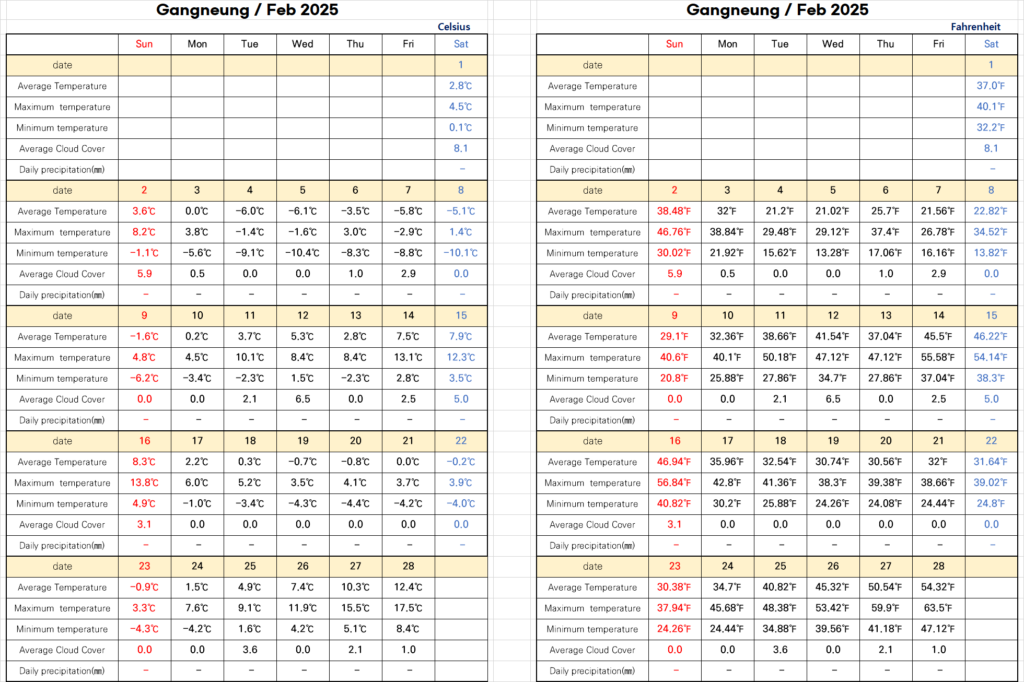
Gangneung Weather in February – Sharp Temperature Swings. Gangneung showed some of the most dramatic temperature changes of the month.
The first week was cold and dry, with early morning temperatures dropping to around -10.4°C (13.3°F) on February 4–5, comparable to Seoul’s coldest days. During the second week, temperatures rose noticeably, with daytime highs exceeding 10°C (50°F) on several days. Rainfall on February 12 marked a clear turning point in the overall weather pattern.
The third week began on a warmer note, reaching 13.8°C (56.8°F) on February 16, before cooler mornings returned later in the week. The biggest surprise came in the fourth week, when temperatures surged. On February 28, Gangneung recorded a daytime high of 17.5°C (63.5°F), making it feel more like early April than late winter.
When considering Korea weather in February, Gangneung stands out for its rapid shifts, making layered clothing especially important.
Korea weather in February—Jeju
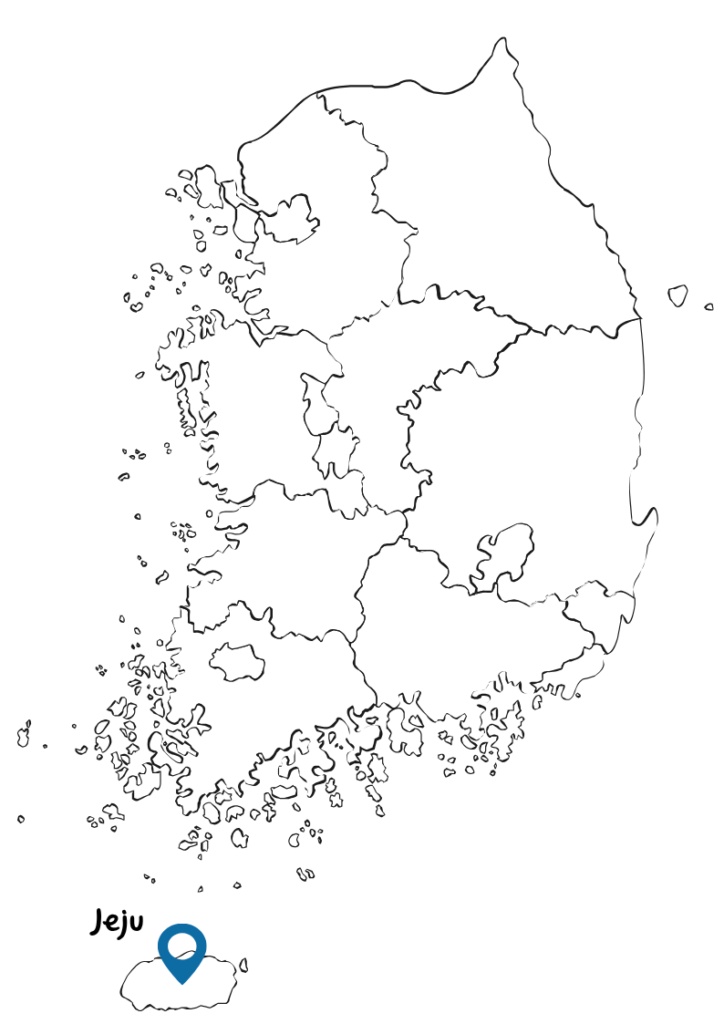
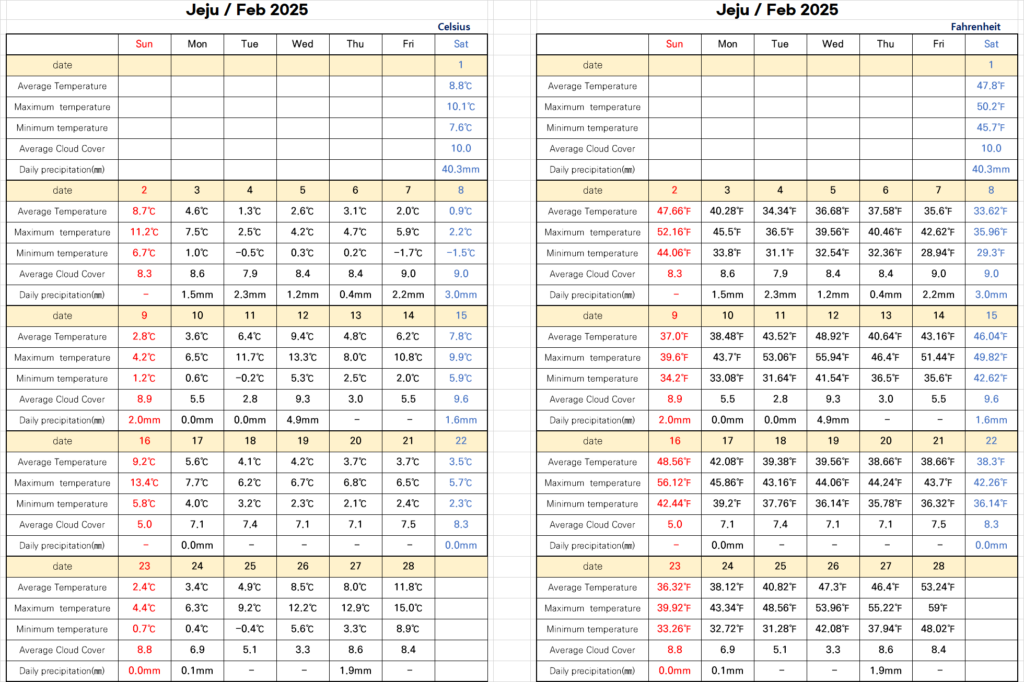
Jeju Weather in February—Mild Temperatures and Frequent Rain. Jeju followed an entirely different pattern from mainland cities.
The first week saw heavy rainfall, including 40.3 mm on February 1, with rain continuing almost daily through February 8. Temperatures stayed mostly above freezing, which made the weather feel damp rather than cold.
The second and third weeks remained mild, with daytime highs hovering around 13°C (55.4°F), along with occasional rain and generally cloudy skies. In the final week, rain continued intermittently, but temperatures rose again, reaching 15.0°C (59.0°F) on February 28, giving the island a noticeably early-spring feel.
For travelers, Korea weather in February in Jeju feels less like winter and more like a wet early spring.
FAQs: Korea Weather in February
Is February too cold to visit Korea?
February in Korea can feel freezing at the beginning of the month, especially in northern and inland areas. However, by late February, temperatures become much more comfortable, and many travelers find it a pleasant time to visit.
What is the coldest city in Korea in February?
Seoul is usually the coldest, particularly in early February. Inland cities such as Gyeongju can also feel freezing in the mornings due to large temperature drops overnight.
Does it snow in Korea in February?
Yes, snow is still possible, especially in early February and in northern regions. In southern cities and Jeju Island, rain is more common than snow during this time.
What to Wear in Korea in February: Quick Clothing Guide
If someone asks what to wear when visiting Korea in February, the honest answer is that winter clothing is necessary in every city. Even though temperatures can rise during the day toward the end of the month, mornings and evenings remain cold across the country. A regular coat is often not warm enough, especially in early to mid-February. A padded jacket is the safest option, paired with thermal innerwear to help retain body heat. Many travelers underestimate how cold it can feel outdoors, particularly when walking long distances or waiting for public transportation.
Footwear is just as important. Insulated shoes, preferably with fleece or fur lining, help keep your feet warm during long days outside. Gloves and a hat are also highly recommended, as exposed hands and ears can quickly become uncomfortable in cold and windy conditions.
In short, regardless of which city you visit, dressing properly for winter is the best approach when deciding what to wear in Korea in February. Being slightly overprepared is far better than realizing too late that your outfit is not warm enough.
🌸 Travel Tip from your Seoulmate, Renny! If you’re visiting Korea in February, be sure to avoid Seollal (Lunar New Year), one of Korea’s longest national holidays, when transportation and accommodations sell out quickly. Curious about Korean public holidays this year? Check the official holiday calendar here