Korea weather in March / what to wear in March in Korea is one of the most common questions international travelers ask before planning a spring trip. March is the month when Korea begins to move out of winter, but the change is not simple or uniform. In some cities, mornings still feel cold enough for a coat, while in others, late-afternoon sunshine already hints at real spring. That is exactly why Korea weather in March can feel more complicated than many first-time visitors expect.
When travelers search for Korea weather in March, they often imagine one soft and comfortable spring pattern for the whole country. In reality, March in Korea is still a transition month, and the weather can change a lot depending on the city, the time of day, and whether the area is coastal or inland. Northwestern coastal cities can stay windy and raw, central inland cities often show wide temperature swings, and southern cities begin to warm more confidently by the second half of the month. Because of that, understanding Korea weather in March city by city is much more useful than looking at one national average.
The best travel advice for Korea weather in March is to prepare for layering, not just “spring clothes.” A cardigan, knit top, sweatshirt, light jacket, trench coat, or light padded outerwear can all become useful depending on the week and the destination. Some afternoons feel soft and bright, but early mornings, rainy days, and late evenings can still feel much cooler than travelers expect. If you want to understand Korea weather in March more accurately, it helps to look at how the month actually unfolded in each city.
Korea weather in March – Incheon
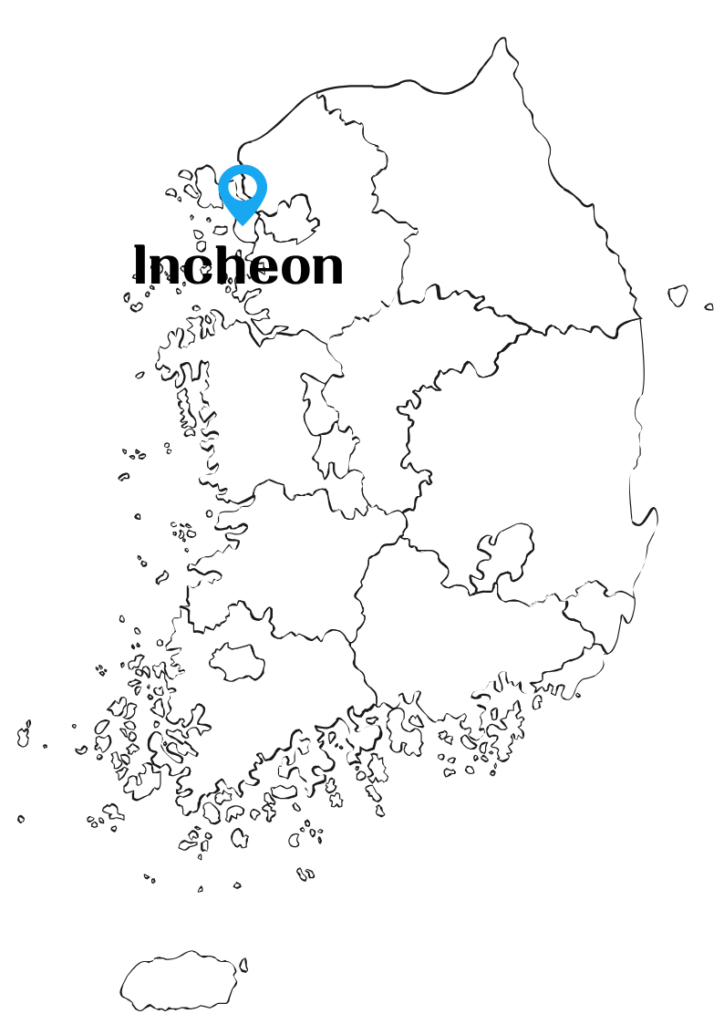
Incheon is located on the northwestern coast of South Korea, facing the Yellow Sea, and that geography shapes its March climate very clearly. Because of the sea, wind often makes the city feel colder than the temperature itself suggests, especially in the first half of the month. Incheon usually warms more slowly than southern inland cities, so March here often feels like late winter and early spring mixed together. For travelers researching Korea weather in March, Incheon is a good reminder that coastal wind can completely change the real travel feeling.
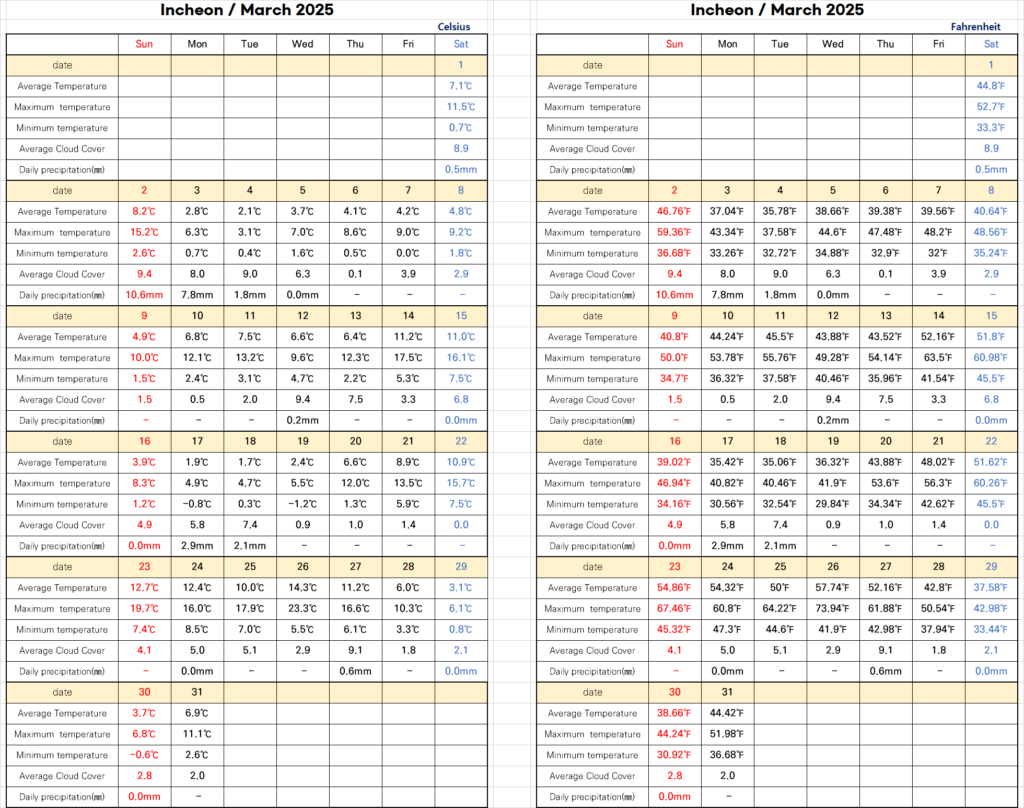
Week 1 (March 1–2)
The month began with a highest temperature of 15.2°C (59.36°F), while the lowest temperature fell to 0.7°C (33.3°F). Rainfall totaled 11.1mm during this short opening stretch, with 0.5mm on March 1 and 10.6mm on March 2. The weather felt damp, windy, and rougher than a soft spring opening. Travelers would have felt that the season had not fully settled yet despite the relatively mild daytime peak.
Week 2 (March 3–9)
The second week brought a highest temperature of 10.0°C (50.0°F), while the lowest temperature dropped to 0.0°C (32.0°F). Rainfall reached 9.6mm in total, mostly from 7.8mm on March 3 and 1.8mm on March 4. The city stayed cool and unsettled, and the sea breeze likely made the air feel sharper than the numbers alone suggested. This was still a definite coat-weather week rather than a light-spring week.
Week 3 (March 10–16)
During the third week, the highest temperature climbed to 17.5°C (63.5°F), while the lowest temperature stayed at 1.2°C (34.16°F). Rainfall was minimal at just 0.2mm, appearing only lightly around March 12. The overall mood turned brighter and more clearly spring-like during the daytime. Even so, mornings still held enough chill that layered clothing remained the smarter choice.
Week 4 (March 17–23)
The fourth week showed a highest temperature of 19.7°C (67.46°F) and a lowest temperature of -1.2°C (29.84°F). Rainfall totaled 5.0mm, mainly from 2.9mm on March 17 and 2.1mm on March 18. The week felt changeable, with cold starts but increasingly mild afternoons as the period went on. Travelers would have felt spring arriving, though not in a smooth or fully reliable way.
Week 5 (March 24–31)
The final week reached a highest temperature of 23.3°C (73.94°F), while the lowest temperature dropped to -0.6°C (30.92°F). Rainfall stayed very light at 0.6mm, with only a small wet spell on March 27. The daytime air became much softer, brighter, and more relaxed than in early March. Incheon ended the month with a much more comfortable spring feeling, though evenings still cooled down quickly.
Summary & What to Wear in March in Korea (Incheon)
Incheon in March begins windy, damp, and chilly, then becomes noticeably milder by late month. Because of the coastal exposure, the city often feels cooler than inland places even when the temperature looks similar on paper. For anyone checking Korea weather in March before landing in Incheon, a knit top, cardigan, sweatshirt, or light sweater with a trench coat, wool coat, or light padded jacket is the safest combination. Sneakers, a scarf for windier days, and an extra evening layer are all practical choices.
Many travelers looking up Korea weather in March also ask similar questions about Incheon.
Q: Does Incheon feel colder than Seoul in March?
A: It can feel colder than the thermometer suggests because of coastal wind, especially near the airport, harbor, or open waterfront areas. Even moderate temperatures can feel sharper when the wind picks up.
Q: Is March too cold for visiting Songdo or Wolmido?
A: Not at all, but timing matters. Afternoon is much more comfortable than early morning or after sunset.
Q: Should I still bring a padded jacket to Incheon in March?
A: A heavy winter long padding is not necessary every day, but a light padded jacket or warmer outer layer is still useful in early March. Windy and rainy days can feel colder than expected.
Korea weather in March – Daejeon
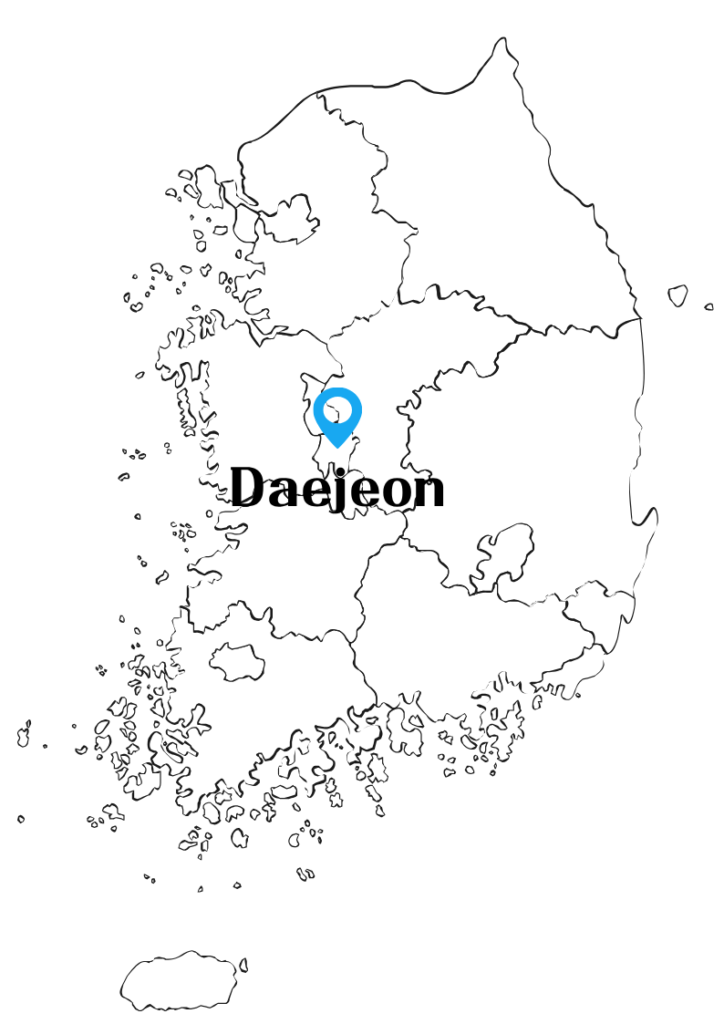
Daejeon is located in the central inland region of South Korea, and its climate shows the classic inland spring pattern very well. The city can still feel cold in the morning, but temperatures rise faster during the day once sunshine becomes stronger. Because Daejeon is not directly exposed to the sea, it often experiences wider daily temperature swings than coastal cities. For travelers comparing cities and trying to understand Korea weather in March, Daejeon shows how dramatic inland spring transitions can be.
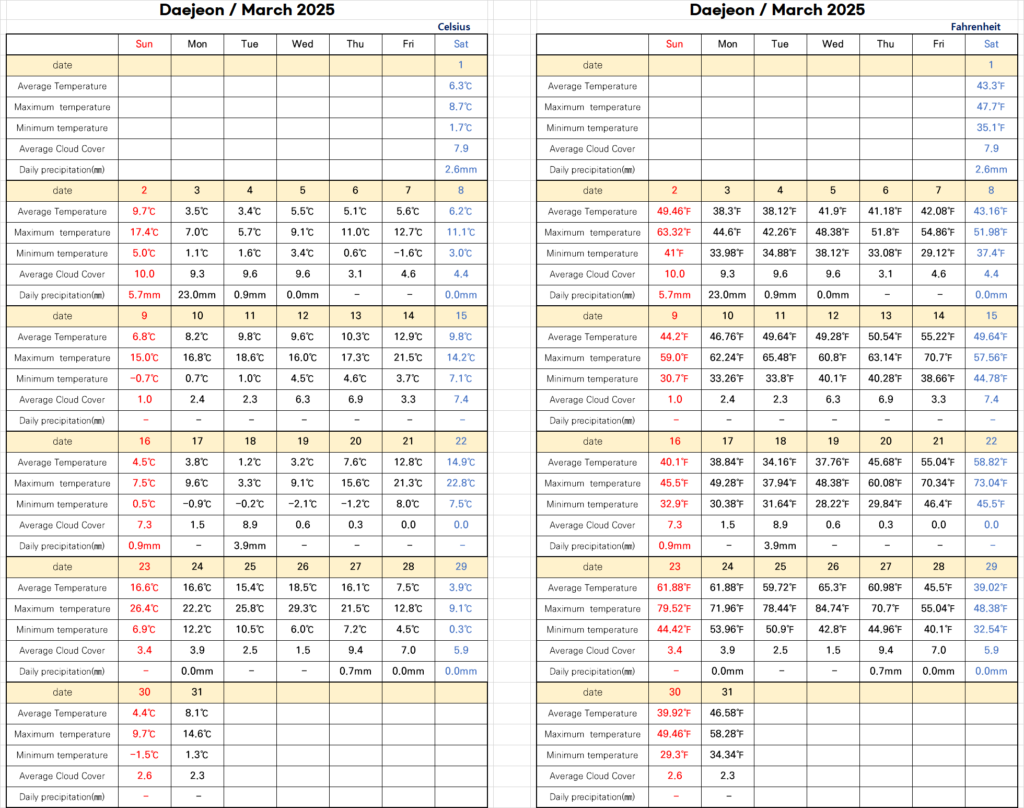
Week 1 (March 1–2)
The month opened with a highest temperature of 17.4°C (63.32°F), while the lowest temperature fell to 1.7°C (35.1°F). Rainfall totaled 8.3mm, with 2.6mm on March 1 and 5.7mm on March 2. The weather felt mild for part of the day but still damp and unstable overall. Travelers would have noticed that spring warmth was present, but not yet dependable.
Week 2 (March 3–9)
In the second week, the highest temperature reached 15.0°C (59.0°F), while the lowest temperature dropped to -1.6°C (29.12°F). Rainfall was quite heavy for the week at 23.9mm, especially because of 23.0mm on March 3. The city felt wetter, grayer, and much more unsettled than a bright spring week would suggest. This period still leaned much closer to late winter than comfortable spring travel weather.
Week 3 (March 10–16)
The third week brought a highest temperature of 21.5°C (70.7°F), while the lowest temperature stayed at 0.5°C (32.9°F). Rainfall was minimal at 0.9mm, appearing only lightly on March 16. The contrast between morning and afternoon became more obvious, with chilly starts and much milder middle-of-the-day conditions. Travelers would have felt real spring energy in the afternoon, even though the day did not begin that way.
Week 4 (March 17–23)
During the fourth week, the highest temperature climbed to 26.4°C (79.52°F), while the lowest temperature dropped to -2.1°C (28.22°F). Rainfall totaled 3.9mm, mostly from March 18. The weather pattern felt dramatic, with cold lows but clearly warm late-week afternoons. Daejeon showed one of the most noticeable inland warm-ups among the cities in this guide.
Week 5 (March 24–31)
The final week reached a highest temperature of 29.3°C (84.74°F), while the lowest temperature fell to -1.5°C (29.3°F). Rainfall stayed light at 0.7mm, with only a small wet point around March 27. The overall travel feeling became warmer, brighter, and much more open by the last part of the month. Daejeon ended March with almost early-summer-like afternoon warmth on its hottest day, even though mornings still reminded people that it was only March.
Summary & What to Wear in March in Korea (Daejeon)
Daejeon in March is all about daily contrast, with cool mornings, mild afternoons, and a strong late-month warm-up. The city can feel chilly and rainy in early March, but much more pleasant from mid-March onward. For travelers reading about Korea weather in March and planning inland trips, Daejeon is a city where layering matters much more than one single heavy coat. A long-sleeve top, cardigan, light knit, zip-up jacket, or spring coat works very well, and late in the month some afternoons may feel warm enough for lighter outfits.
Many travelers researching Korea weather in March ask practical questions like these about Daejeon.
Q: Does Daejeon feel warmer than coastal cities in late March?
A: In the afternoon, it often does. Inland sunshine can push daytime temperatures up faster once the air starts warming.
Q: Is Daejeon very rainy in March?
A: Not all month, but the beginning of March can be notably wet. After that, conditions become drier and more travel-friendly.
Q: Can I wear only a light jacket in Daejeon in March?
A: Sometimes in the afternoon, yes. But mornings and nights are still cool enough that layering is the safer choice.
Korea weather in March – Jeonju
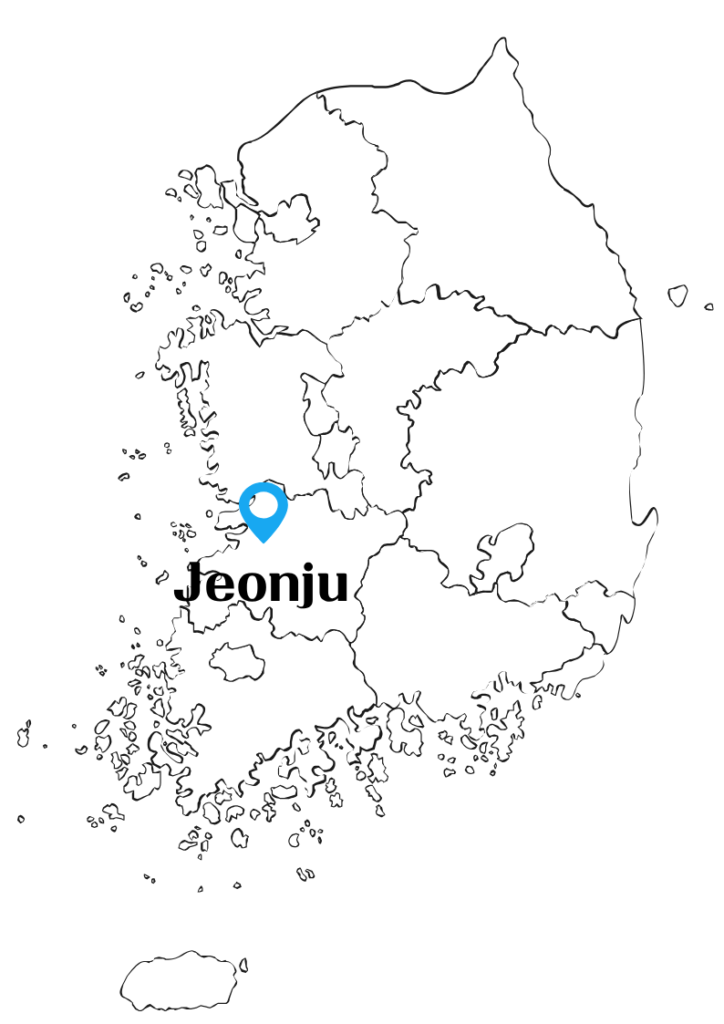
Jeonju sits in the southwestern inland part of Korea and often feels softer than colder northern cities once spring begins moving in. At the same time, early March can still bring cool air, rain, and unstable daily temperatures. The city’s pattern in March is not one of instant warmth, but of a gradual shift from chilly and damp to pleasant and bright. For visitors interested in Korea weather in March, Jeonju is a good example of how spring can arrive gently rather than dramatically.
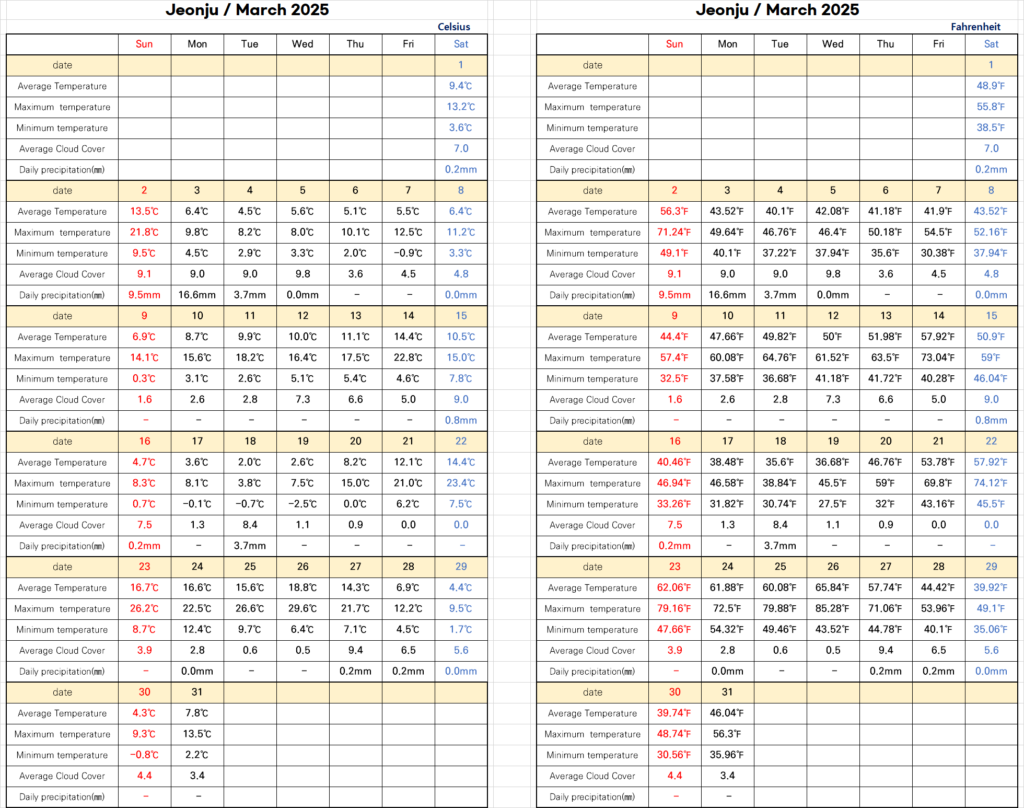
Week 1 (March 1–2)
The month began with a highest temperature of 21.8°C (71.24°F), while the lowest temperature dropped to 3.6°C (38.5°F). Rainfall totaled 9.7mm, including 0.2mm on March 1 and 9.5mm on March 2. The opening felt warm by day but damp and unsettled overall. Travelers would have noticed that the numbers looked mild, but the atmosphere still did not feel like settled spring.
Week 2 (March 3–9)
The second week recorded a highest temperature of 14.1°C (57.4°F), while the lowest temperature fell to -0.9°C (30.38°F). Rainfall was significant at 20.3mm, mostly from 16.6mm on March 3 and 3.7mm on March 4. The city felt cooler, wetter, and more unstable than the opening weekend suggested. Jeonju still carried a lingering early-spring chill, especially in the mornings.
Week 3 (March 10–16)
During the third week, the highest temperature rose to 22.8°C (73.04°F), while the lowest temperature stayed at 0.7°C (33.26°F). Rainfall remained low at 1.0mm in total, with 0.8mm on March 15 and 0.2mm on March 16. The overall feeling became brighter, drier, and much more comfortable for daytime walking. This was the point where Jeonju began to feel genuinely pleasant for outdoor travel.
Week 4 (March 17–23)
The fourth week brought a highest temperature of 26.2°C (79.16°F) and a lowest temperature of -2.5°C (27.5°F). Rainfall totaled 3.7mm, concentrated on March 18. The daily pattern felt dramatic, with chilly starts and clearly warm afternoons by the end of the period. Travelers would have needed layers because the city moved quickly between cool and warm conditions.
Week 5 (March 24–31)
The final week reached a highest temperature of 29.6°C (85.28°F), while the lowest temperature dropped to -0.8°C (30.56°F). Rainfall was minimal at 0.4mm, with only light precipitation on March 27 and March 28. The overall travel feeling became much softer and brighter, especially during late-month afternoons. Jeonju ended March with a strong spring mood and even a hint of early-summer warmth on the hottest day.
Summary & What to Wear in March in Korea (Jeonju)
Jeonju in March begins cool and somewhat rainy, then shifts steadily toward comfortable late-spring-like afternoons by the end of the month. Mornings still stay cool for much of the month, even when midday weather feels mild. For travelers searching Korea weather in March and planning a hanok village visit, Jeonju is one of the cities where practical layers matter more than overly heavy winter wear. A cardigan, knit, long-sleeve top, trench coat, light jacket, or light wool coat works well, and comfortable walking shoes are especially important.
Many readers checking Korea weather in March also tend to ask these questions about Jeonju.
Q: Is Jeonju still cold in early March?
A: Yes, especially in the morning and on rainy days. It is better to think of early March as transitional spring rather than warm spring.
Q: Is March a good time to wear hanbok in Jeonju?
A: Yes, especially from mid to late March when afternoons become much milder. You may still want an extra layer in the morning or if the day is windy.
Q: Does Jeonju get warmer toward the end of March?
A: Definitely. Late March can feel surprisingly soft and bright in the afternoon compared with the colder beginning of the month.
Korea weather in March – Gwangju
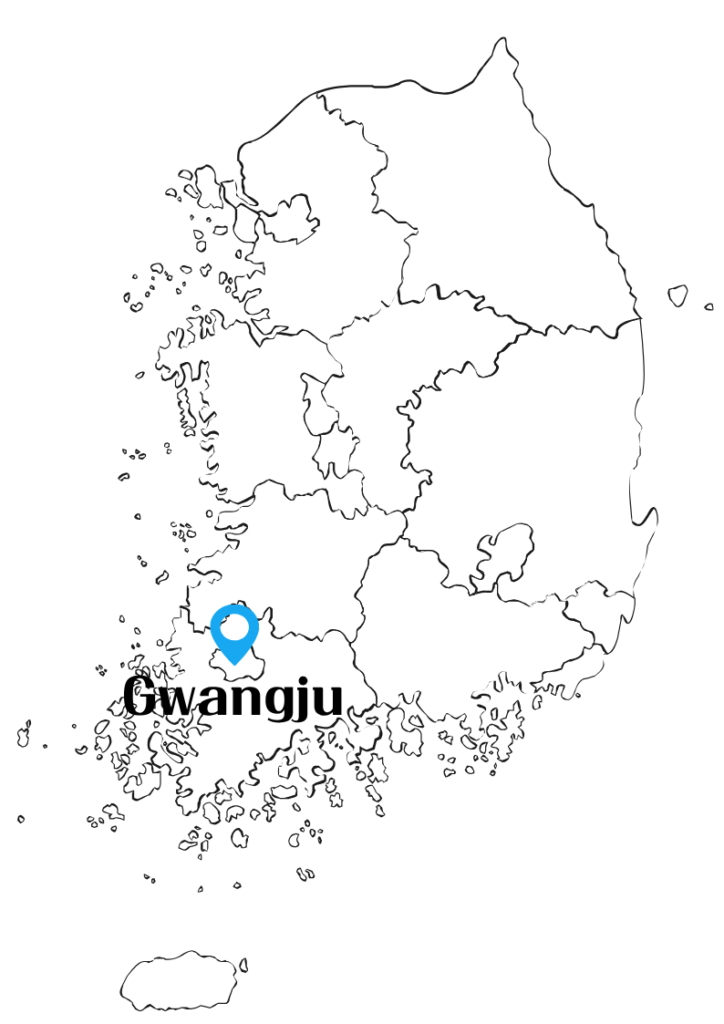
Gwangju is located in the southwest of Korea, and it is one of the cities where spring tends to become noticeable a little earlier and more clearly than in colder northern areas. Even though early March can still feel cool and rainy, the city shows a stronger and steadier late-month warming trend. Gwangju often begins the month with a mixed early-spring mood and ends it with much more confident warmth. For those studying Korea weather in March city by city, Gwangju is one of the clearest examples of a southwest spring shift.
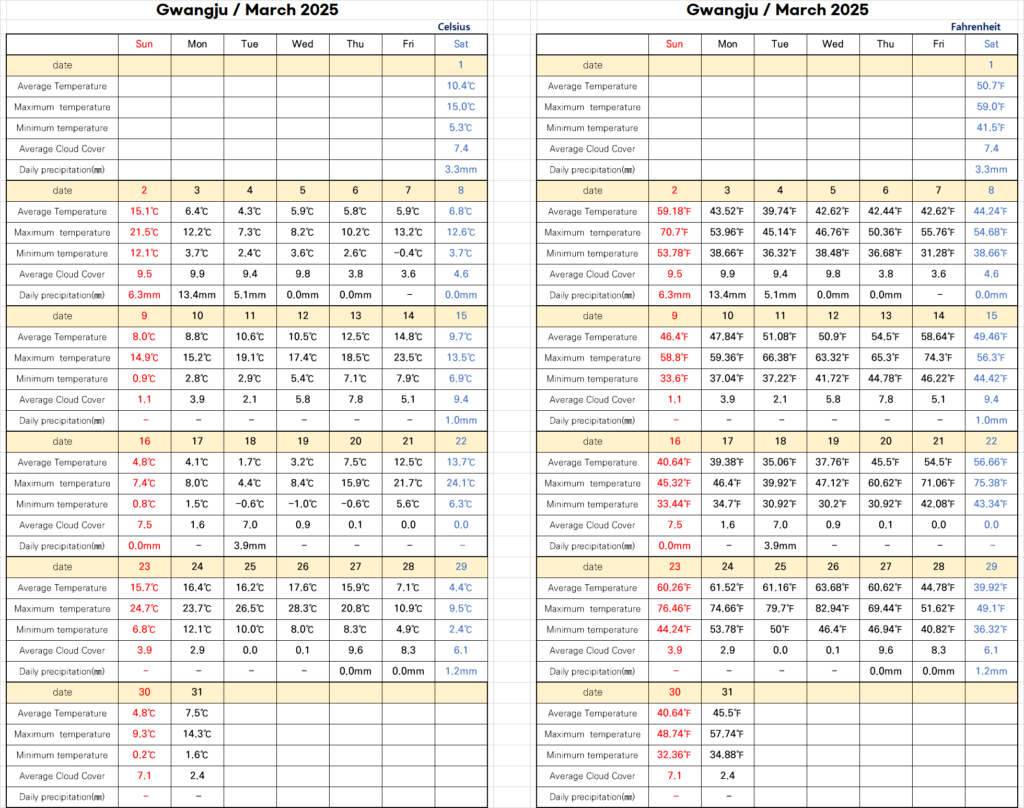
Week 1 (March 1–2)
The month opened with a highest temperature of 21.5°C (70.7°F), while the lowest temperature stayed at 5.3°C (41.5°F). Rainfall totaled 9.6mm, with 3.3mm on March 1 and 6.3mm on March 2. The opening felt mild in the daytime but damp and subdued overall because of the rain. Travelers would have found it comfortable under the sun, though not dry or fully settled.
Week 2 (March 3–9)
In the second week, the highest temperature reached 14.9°C (58.8°F), while the lowest temperature dropped to -0.4°C (31.28°F). Rainfall was notable at 18.5mm, mainly because of 13.4mm on March 3 and 5.1mm on March 4. The weather turned cooler and wetter, and the city still held onto a noticeable early-spring chill. This was still a week for coats and layers rather than light shirts.
Week 3 (March 10–16)
The third week brought a highest temperature of 23.5°C (74.3°F), while the lowest temperature stayed at 0.8°C (33.44°F). Rainfall was low at just 1.0mm, appearing only on March 15. The overall mood became much brighter and more comfortable, especially during the late-week mild stretch. Gwangju began to feel much closer to real spring during this period.
Week 4 (March 17–23)
During the fourth week, the highest temperature rose to 24.7°C (76.46°F), while the lowest temperature dropped to -1.0°C (30.2°F). Rainfall totaled 3.9mm, mostly from March 18. The travel feeling was mixed, with cool mornings but increasingly soft afternoons by the end of the week. By this stage, the city was clearly moving out of winter and into a more stable spring pattern.
Week 5 (March 24–31)
The final week reached a highest temperature of 28.3°C (82.94°F), while the lowest temperature fell to 0.2°C (32.36°F). Rainfall stayed light at 1.2mm, mainly on March 29. The weather felt warm, bright, and much more relaxed than it had in early March. Gwangju finished the month with one of the clearest warm spring endings among the five cities in this guide.
Summary & What to Wear in March in Korea (Gwangju)
Gwangju in March starts with some rain and cool air, then warms steadily into much milder late-month conditions. By the last week, daytime weather can feel genuinely warm even though mornings still stay cool. For readers searching Korea weather in March and hoping to pack efficiently, Gwangju is one of the easier cities to plan for if you focus on light layers and one reliable outer layer. A spring coat, trench coat, cardigan, or light jacket over a knit or long-sleeve top is usually enough for most situations.
Many travelers interested in Korea weather in March also ask these questions about Gwangju.
Q: Is Gwangju warmer than northern cities in March?
A: Generally yes, especially from mid to late March. The southwest location helps the city warm more quickly.
Q: Does Gwangju have a lot of rain in March?
A: The wetter part is mostly concentrated in early March. After that, conditions become drier and much more comfortable.
Q: Can I dress lightly in Gwangju in late March?
A: In the afternoon, often yes. Still, mornings and evenings are cool enough that a layer remains useful.
Korea weather in March – Daegu
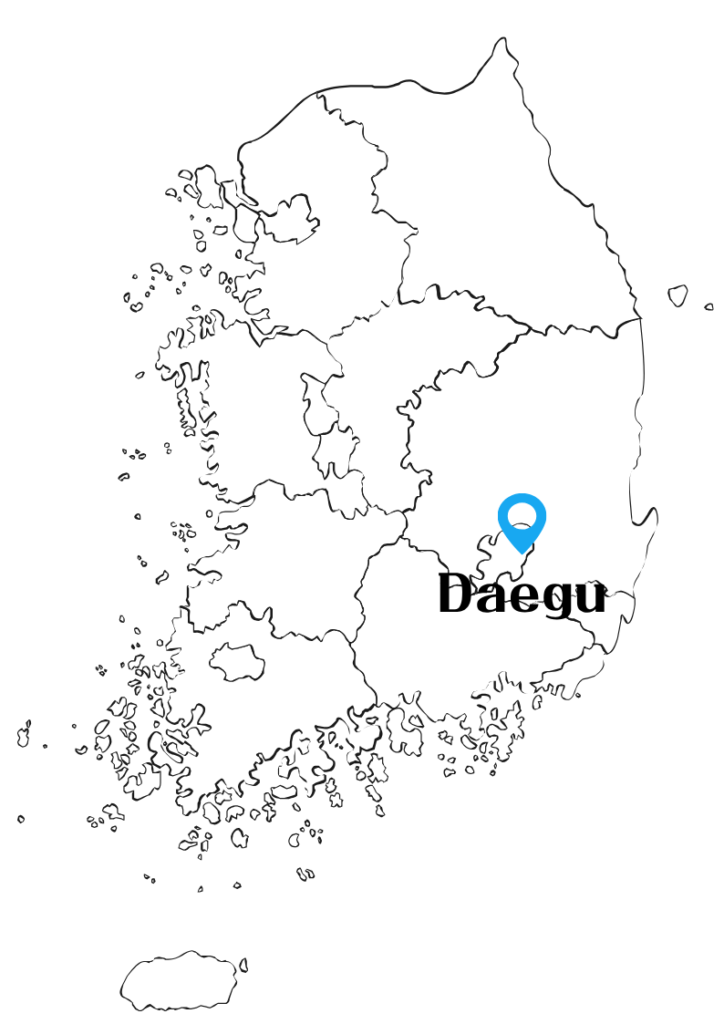
Daegu lies in a southeastern inland basin, and that geography gives it one of the most distinctive spring patterns in Korea. The city is known for dryness, strong daytime warming, and large temperature swings between morning and afternoon. Early March still feels cool, but the warming trend becomes much more dramatic in the second half of the month. For travelers comparing regional patterns within Korea weather in March, Daegu stands out as the city with the strongest late-month warmth.
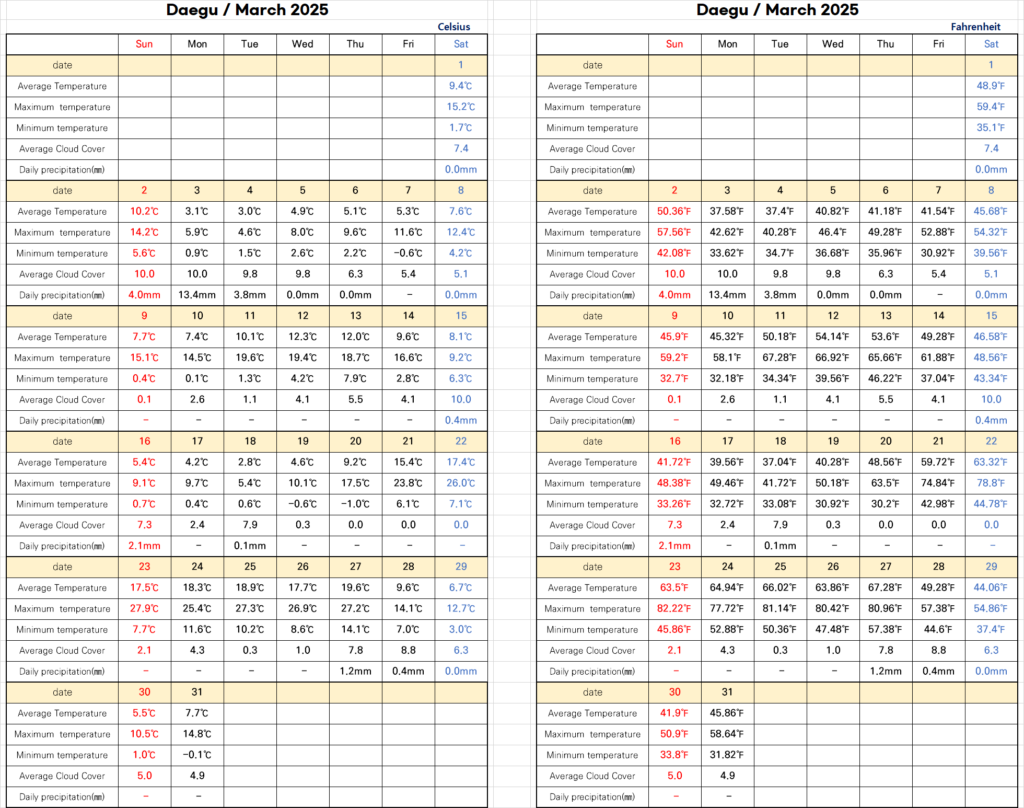
Week 1 (March 1–2)
The month began with a highest temperature of 15.2°C (59.4°F), while the lowest temperature dropped to 1.7°C (35.1°F). Rainfall totaled 4.0mm, entirely from March 2. The overall feeling was fairly calm and not especially severe, though the city still felt cool rather than warm. Travelers would have noticed that Daegu looked brighter than a winter city, but had not fully turned into spring yet.
Week 2 (March 3–9)
The second week brought a highest temperature of 15.1°C (59.2°F), while the lowest temperature fell to -0.6°C (30.92°F). Rainfall reached 17.2mm, mainly from 13.4mm on March 3 and 3.8mm on March 4. The weather felt wetter and cooler than later in the month, and the city still looked somewhat unstable. Even so, the sunnier breaks already hinted at Daegu’s drier character.
Week 3 (March 10–16)
During the third week, the highest temperature climbed to 19.6°C (67.28°F), while the lowest temperature stayed at 0.1°C (32.18°F). Rainfall totaled 2.5mm, coming mainly from 0.4mm on March 15 and 2.1mm on March 16. The city felt brighter, drier, and more comfortable than in the first half of the month. This was the period when Daegu started to feel clearly warmer in the afternoon than the colder early-March pattern suggested.
Week 4 (March 17–23)
The fourth week showed a highest temperature of 27.9°C (82.22°F) and a lowest temperature of -1.0°C (30.2°F). Rainfall was almost absent at just 0.1mm on March 18. The daily contrast felt dramatic, with cold starts and very warm late-week afternoons. Travelers would have felt a strong spring surge here, even though the day still began with cool air.
Week 5 (March 24–31)
The final week reached a highest temperature of 27.3°C (81.14°F), while the lowest temperature dropped to -0.1°C (31.82°F). Rainfall stayed low at 1.6mm, mainly from March 27 and March 28. The weather felt dry, bright, and surprisingly warm for late March, especially during the afternoon. Daegu ended the month with the strongest spring warmth of all five cities while still keeping cool early-hour lows.
Summary & What to Wear in March in Korea (Daegu)
Daegu in March shows one of the most dramatic warm-ups, especially in the second half of the month. Daytime becomes much softer and warmer than many travelers expect, but mornings still hold onto spring chill. For anyone searching Korea weather in March and wondering which city feels warmest by late month, Daegu is one of the clearest answers in this set of data. A light jacket, cardigan, spring coat, or knit works well in the afternoon, while an extra layer is still useful at the beginning and end of the day.
People who research Korea weather in March also ask practical questions like these about Daegu.
Q: Is Daegu warm in late March?
A: Yes, late March afternoons can feel surprisingly warm in Daegu. On the warmest days, the city can feel much further into spring than colder coastal areas.
Q: Why does Daegu feel different from seaside cities?
A: Its inland basin geography allows stronger daytime warming and a drier overall feel. That creates bigger temperature swings and brighter afternoon comfort.
Q: Do I still need a coat in Daegu in March?
A: Yes, especially in the morning and evening. The afternoon can feel light and mild, but the full day is not warm enough for summer-like dressing.
Korea weather in March can feel surprisingly different depending on where you go, and that is exactly what makes March such an interesting month for travel in Korea. Incheon stays windier and cooler because of the coast, Daejeon shows strong inland temperature swings, Jeonju softens gradually into a more comfortable spring rhythm, Gwangju warms steadily in the southwest, and Daegu shows the strongest late-month warmth of all. If you understand Korea weather in March as a transition rather than a fixed spring season, it becomes much easier to pack well and enjoy your trip.
For most travelers, the smartest response to Korea weather in March is not one perfect outfit but a flexible wardrobe. Light layers, one reliable outer layer, comfortable walking shoes, and a little extra preparation for morning chill will make a big difference. Korea weather in March is beautiful precisely because it shows the country changing season by season in real time, and that gives each city its own travel mood. This has been Seoul Mate Lenny, sharing a closer look at Korea’s weather across different cities. I hope this guide helps anyone planning a trip to Korea better understand the climate and prepare for their journey.



If this post was helpful, you might also like this one!